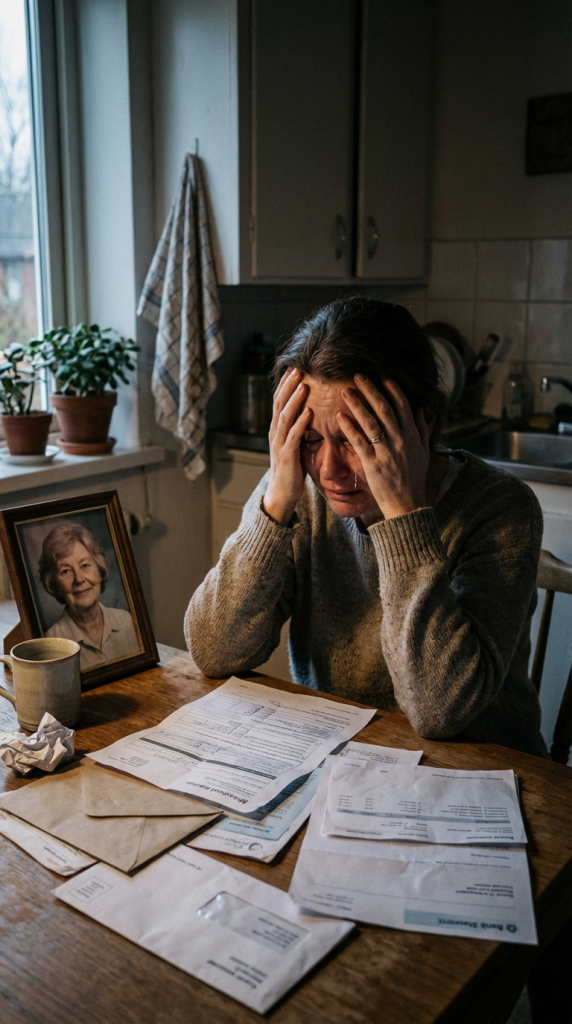
I never thought I’d be writing this, but I need to get it off my chest. What my mother-in-law did to me still haunts me every single day, and I’m only now starting to process the full extent of her manipulation. This is the story of how I lost nearly everything I had because I trusted the wrong person.
The Perfect Beginning
When I first met Diana, my now-husband Mark’s mother, she seemed like the sweetest woman in the world. She welcomed me with open arms, told me how happy she was that Mark had found someone who “truly understood him,” and even gave me her grandmother’s bracelet as a welcome gift. I felt like I’d won the mother-in-law lottery.
Mark and I got married two years after we started dating. The wedding was beautiful, and Diana was involved in every step of the planning. She helped me choose flowers, tasted cake samples with us, and even offered to pay for the reception venue. I thought I was gaining not just a husband, but a second mother.
My own mom had passed away when I was nineteen, leaving me a substantial inheritance that I’d been careful with over the years. It wasn’t millions, but it was enough to give Mark and me a solid start—about $180,000 that I’d kept invested and saved for our future home, potential children, and emergencies.
The Devastating News
Six months after our wedding, Diana called me in tears. Mark was at work, and I was home on my day off when my phone rang. Her voice was shaking so badly I could barely understand her.
“Sarah, I need to tell you something,” she sobbed. “I went to the doctor last week for some tests. They found something.”
My heart dropped. “What do you mean? What did they find?”
“It’s cancer, honey. Stage three ovarian cancer. They want to start aggressive treatment immediately, but my insurance…” She broke down completely. “My insurance isn’t going to cover most of it. I don’t know what to do.”
I felt like the floor had disappeared beneath me. Diana was only fifty-eight years old. She was vibrant, healthy, always exercising and eating well. How could this be happening?
“Have you told Mark?” I asked, my own voice shaking now.
“Not yet. I can’t bear to tell him. You know how he worries. And with his new job, the stress might be too much. Sarah, I’m so scared.”
We talked for over an hour. She told me about the treatment plan—chemotherapy, radiation, possibly surgery. She said the out-of-pocket costs would be astronomical, somewhere between $80,000 and $120,000 depending on how her body responded. She had maybe $30,000 saved, but it wouldn’t be nearly enough.
The Decision That Changed Everything
That night, I couldn’t sleep. I kept thinking about my own mother and how I’d lost her too soon. The idea of Mark losing his mother when there was something that could be done was unbearable. I had the money. I could help save her life.
The next morning, I sat Mark down and told him about his mother’s diagnosis. He was devastated, exactly as Diana had predicted. He wanted to help financially, but we both knew his income was modest and we were still paying off student loans.
“I want to use my inheritance,” I told him. “Your mom needs this treatment, and we have the means to help her.”
Mark was reluctant at first. “Sarah, that’s your money. Your mom left that for you. I can’t ask you to—”
“You’re not asking. I’m offering. Family takes care of family, right?”
After several emotional conversations, Mark reluctantly agreed, though he insisted we should only give what was absolutely necessary. We decided to offer Diana $90,000 to cover the treatment costs and give her some cushion for recovery time when she couldn’t work.
The Treatment Journey
Over the next eight months, Diana underwent what she described as grueling treatment. She sent us photos of herself in the hospital, looking gaunt and tired. She told us about the side effects—nausea, hair loss, exhaustion. Mark and I visited her every weekend, bringing groceries, helping around her house, and trying to keep her spirits up.
She always seemed appreciative but also somehow distant. Sometimes when we’d arrive, she’d seem surprised to see us, or she’d be dressed up and looking healthier than I expected for someone going through chemotherapy. When I mentioned this to Mark, he said everyone responds to treatment differently, and maybe we were just catching her on good days.
I transferred the money in three installments—$40,000 initially, then $30,000, then the final $20,000. Each time, Diana thanked me profusely, crying and telling me I was saving her life. She said she’d pay me back someday, though I always told her not to worry about it. How could I ask for money back from someone fighting for their survival?
The Truth Unravels
The truth came out in the most unexpected way. Mark’s sister, Jennifer, who lived across the country and had been mostly absent during Diana’s “illness,” came home for Thanksgiving. We hadn’t seen her in over a year because she’d been dealing with her own life chaos—a messy divorce and job change.
At Thanksgiving dinner, Jennifer mentioned how great Diana looked and how happy she was that the cancer scare had turned out to be nothing serious.
The table went silent.
“What do you mean, nothing serious?” Mark asked slowly.
Jennifer looked confused. “The false alarm from last year? Mom told me the biopsy came back and it wasn’t cancer after all. She said she was so relieved she didn’t have to worry you guys with it since it turned out to be nothing.”
My blood ran cold. Mark’s face had gone completely pale.
“Jennifer,” I said carefully, “your mom was diagnosed with stage three ovarian cancer ten months ago. She’s been in treatment this whole time.”
Jennifer’s expression shifted from confusion to shock to something else—a knowing look that made my stomach turn. “Oh my God,” she whispered. “She did it again.”
“Did what again?” Mark’s voice was hard now, angry.
Jennifer looked at her mother, who had gone completely silent, her face unreadable. “Mom, tell me you didn’t. Tell me you didn’t fake cancer again.”
The Previous Victims
What came out that night destroyed me. Diana had apparently pulled a similar scheme five years earlier with Mark’s father before their divorce. She’d claimed to have breast cancer, and he’d emptied much of his retirement account to help pay for treatment. When he eventually discovered she’d been lying, he divorced her immediately and told his children it was due to “irreconcilable differences” to protect them from the ugly truth.
Jennifer had only found out the real reason a year ago when their father finally told her during a particularly difficult conversation about why he’d been so distant from Diana. She’d assumed her mother had learned her lesson and would never do something so heinous again.
But here we were.
Confronted with the truth, Diana initially tried to deny everything. Then she claimed she’d thought she had cancer but had been misdiagnosed. Finally, when Mark demanded to see medical records, she broke down and admitted it.
“I needed the money,” she said, her voice empty of the warmth I’d always associated with her. “I was in debt. Credit cards, loans, my mortgage was behind. I didn’t know what else to do.”
“So you pretended to be dying?” Mark was shouting now, something I’d never seen him do. “You let Sarah give you her mother’s inheritance? You let us worry and cry and spend every weekend taking care of you?”
“I didn’t think it would go this far,” Diana said weakly. “I thought I’d just need a little help, and then I’d find a way to pay it back.”
The Aftermath
The money was gone. All of it. Diana had used it to pay off credit card debt, catch up on her mortgage, buy a new car, and apparently take two vacations that she’d told us were “medical recovery retreats” recommended by her doctors.
She had no assets we could claim. Her house had a reverse mortgage, her new car was already depreciating, and legally, proving that she’d committed fraud would be difficult because we’d given her the money willingly. A lawyer told us we could potentially pursue civil action, but it would be costly, time-consuming, and might not result in recovering anything.
Mark was devastated. He cut off all contact with his mother immediately. Jennifer apologized over and over for not warning us sooner, saying she’d hoped their mother had changed and hadn’t wanted to poison Mark’s relationship with Diana based on something from the past.
As for me, I felt like a fool. I’d given away my mother’s money—money she’d worked hard for and saved carefully to leave for me—to someone who saw me as nothing more than a convenient ATM. Every dollar represented hours of my mother’s life, her hopes for my future, her love for me. And I’d handed it over to a con artist.
Rebuilding and Moving Forward
It’s been eight months since that terrible Thanksgiving. Mark and I are still together, though our relationship went through an extremely rough patch. He felt guilty even though none of this was his fault. I struggled with resentment, not toward him, but toward the situation. We went to couples counseling and slowly worked through it.
We had to completely restart our financial planning. The house we’d hoped to buy is now years away instead of months. The cushion I’d had for emergencies is gone. We’re building our savings from scratch, and every dollar we put away feels both like progress and a reminder of what we lost.
Diana has tried to reach out several times. She’s sent letters, emails, and even showed up at our house once. Mark called the police that time, and she hasn’t tried again. She alternates between apologizing and trying to justify what she did, claiming she was desperate and didn’t know what else to do. She’s never once genuinely tried to make amends or create a real repayment plan.
The hardest part isn’t even the money, though that hurts terribly. It’s the betrayal. Diana made me believe she loved me, that I was part of her family, that she cared about me as more than just a source of money. She faked tears, hospital visits, chemotherapy symptoms. She looked me in the eye and lied to me dozens of times over months. That kind of manipulation leaves scars that money can’t measure.
The Lessons I’ve Learned
I’ve learned some hard lessons from this experience. First, trust should be earned over time, not given freely just because someone is family by marriage. Second, even in emergencies, it’s important to verify information independently. I should have asked to accompany Diana to appointments, spoken to her doctors, or at minimum seen actual medical documentation.
Third, no matter how much you want to help someone, you need to protect yourself financially. I should have insisted on a formal loan agreement, kept the money in my name and paid medical bills directly, or at minimum only provided money in small increments tied to verified expenses.
But perhaps most importantly, I’ve learned that some people are capable of truly unconscionable acts when they feel desperate. Diana wasn’t an obviously bad person. She seemed kind, loving, and genuine. The warning signs were subtle—her evasiveness about certain details, the way she’d sometimes look healthier than expected, her reluctance to let us come to appointments. I explained them all away because I trusted her and couldn’t imagine someone lying about cancer.
To Anyone Reading This
If you’re in a similar situation where someone is asking for substantial financial help for medical treatment, please take these precautions:
Ask to see medical documentation. Real patients have real records, and any legitimate person should understand why you need verification before giving tens of thousands of dollars.
Offer to pay medical providers directly rather than giving cash. This ensures money goes where it’s supposed to go.
Attend appointments when possible. If they always have reasons you can’t come along, that’s a red flag.
Consult with other family members. In my case, if I’d spoken to Jennifer earlier, I might have learned about Diana’s history.
Set up a formal agreement. Even with family, protect yourself legally. It feels cold, but it’s necessary.
Trust your instincts. If something feels off, investigate further.
I’m sharing this story not for sympathy, though I appreciate any understanding I receive. I’m sharing it because I want to prevent this from happening to someone else. Financial manipulation by family members is more common than people think, and cancer fraud specifically is a devastating form of abuse that preys on people’s compassion and fear.
Where I Am Now
Today, I’m angry, but I’m also healing. I’ve accepted that I’ll likely never see that money again. Diana will probably never face real consequences for what she did. But I’ve learned to set boundaries, recognize red flags, and value my own financial security.
Mark and I are closer now than we were before, having weathered this storm together. We’re building a future based on our own hard work rather than my inheritance. In a strange way, losing the money has made us more resilient and more careful about who we trust.
But I still miss my mom every day. And I still feel guilty that the legacy she left me ended up in the hands of someone who exploited my kindness. That’s something I’m working on forgiving myself for.
If Diana is reading this—and I hope she is—I want her to know that what she did was unforgivable. She didn’t just steal money. She stole my trust, my peace of mind, my mother’s legacy, and precious months of our lives that we spent worrying about her imaginary illness. I hope the new car and the paid-off credit cards were worth destroying your relationship with your son and any chance at a relationship with future grandchildren.
To everyone else: protect yourselves, trust but verify, and remember that sometimes the people who seem the safest are the ones capable of causing the most harm. I learned that lesson the hardest way possible.