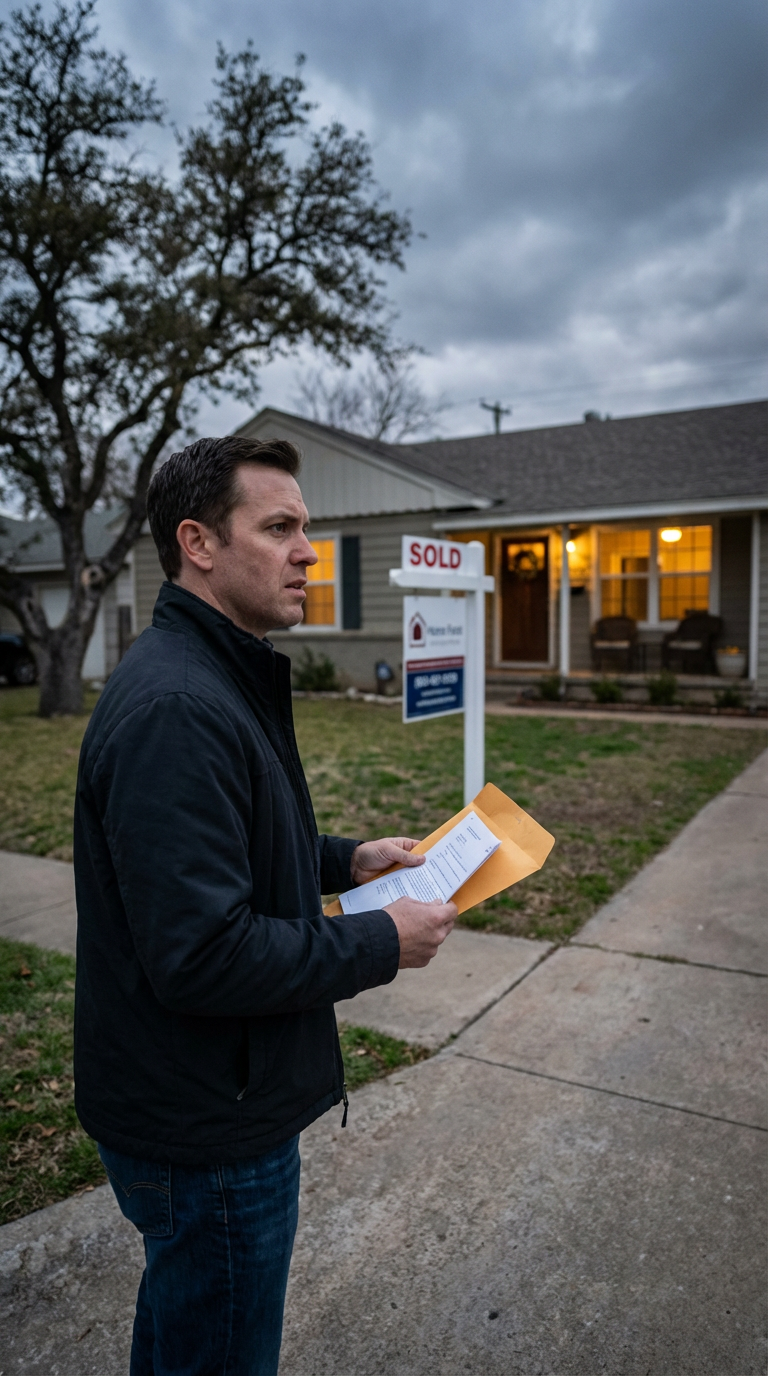
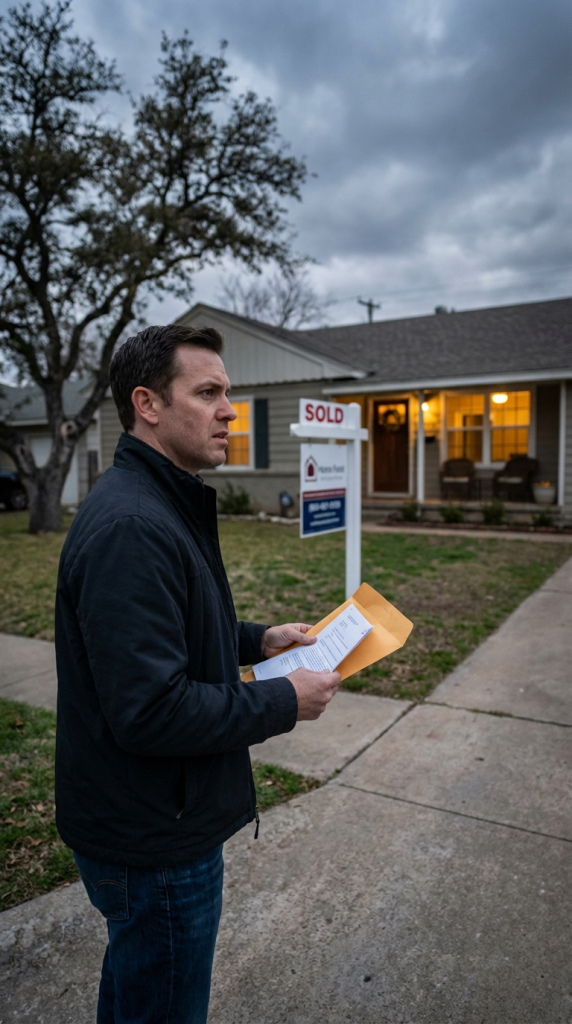
Our parents died in a car accident five years ago. It was brutal and sudden. They didn’t leave much—no big savings, no investments—but they did leave us one thing: the house we grew up in.
It wasn’t fancy. A three-bedroom place in a working-class neighborhood, a little rundown in places but full of memories. The will was clear: the house was to be split 50/50 between me and my brother, Adam, with equal rights and equal say over what happened to it.
At the time, I was living in a rented one-bedroom apartment across town, working as an IT tech. Adam was already married with two kids and living about an hour away in a bigger city.
We agreed not to sell the house right away. Neither of us was emotionally ready. It became a kind of shrine to our parents at first. I’d go over on weekends, mow the lawn, fix little things, sit in my dad’s old recliner and just… exist there. Adam came less often, but he always talked about “keeping the house in the family.”
After about a year, the sentimental haze started to clear. Property taxes, utilities, and basic maintenance were stacking up. I was the one paying most of it, because I was the one actually handling the mail, the bills, and the repairs. Adam would “get me back later” but somehow never had the cash.
We had several conversations about what to do.
- Adam’s idea: rent the house out and split the income.
- My idea: either rent it properly with a formal agreement or sell it and split the money evenly.
We never got to a firm plan. Every time I tried to formalize anything, Adam would say, “Relax, dude, it’s our house. We’ll figure it out.”
I should have known that was a problem.
The Secret Sale I Never Agreed To
The betrayal came to light in the most boring way possible: a letter.
I went to the house one Saturday to check the mail and do some cleaning. In the pile of envelopes was one from the county recorder’s office addressed to “New Owner.” That alone made my stomach drop.
I opened it and saw exactly what I feared: a recorded deed transfer, showing that the property had been sold six weeks earlier to a couple I’d never heard of. The seller? Listed as “Adam Carter, sole owner.”
Sole. Owner.
I called Adam immediately. My hands were shaking so badly I could barely hit the call button.
He picked up sounding annoyingly casual. “Hey, little bro. What’s up?”
“You sold the house?” I asked, voice flat.
Silence. Then: “You saw the paperwork, I guess.”
“You sold the house behind my back. When were you planning to tell me?”
He sighed like I was inconveniencing him. “Look, Daniel, it wasn’t like that. You weren’t using the place. It was just sitting there. The market was good. It made sense.”
“It made sense? You had no right to sell without my consent. We own that house 50/50.”
“Technically,” he said, and my blood ran cold at that word, “Mom and Dad added me on the title years ago when they did their refinance. It made things easier when they were older. The will just… confirmed things.”
I’d never dug into the title history before, because why would I? I trusted my brother. Turns out, before our parents died, they’d put Adam on the deed to “make it easier” if something happened. They never told me.
“So you think that means you can just cut me out?” I asked, my voice shaking.
“I didn’t cut you out,” he said, sounding defensive. “I took care of everything. I handled the paperwork, the realtor, the showings, the negotiations. It was a lot of work, okay? I was going to give you something.”
“‘Something’?” I repeated. “We were supposed to split it equally.”
“You know my situation,” he snapped. “Two kids, daycare, a mortgage. You’re single, no kids, decent job. You’ll be fine. I needed this more than you. Family helps family.”
He really said that. Family helps family—after selling the only significant asset we shared and keeping the money.
“How much did you get?” I asked.
He hesitated just a fraction too long. “After closing costs? Not that much.”
“Give me a number, Adam.”
“About… 280.”
“Two hundred eighty thousand dollars,” I said quietly. “And how much of that were you planning to ‘give’ me?”
“I don’t know, man!” he exploded. “I was going to sit down, look at taxes, figure it out. You’re freaking out over nothing. You didn’t even live there. You’re acting like I robbed you.”
“You did,” I said. “You literally did.”
He hung up on me.
The Legal Reality Check—and My Plan
The next week was a blur of anger and research. I pulled every document I could: the will, the title history, old emails, bank records related to the house.
Here’s what I found:
- Our parents had indeed added Adam to the deed years ago during a refinance.
- After their deaths, the will said the house should be split “equally between our sons, Adam and Daniel.”
- The will had never been properly probated. Adam had told me he “talked to a lawyer and it was all handled.” That was a lie.
On paper, at the moment of the sale, Adam was the recorded owner. But legally, because of the will, half of that sale proceeds belonged to me as a beneficiary—even if the title hadn’t caught up.
I booked a consultation with a probate and real estate attorney. I showed her everything: the will, the deed, the recorded sale. She read quietly, then leaned back.
“Your brother may have been able to sell as the record owner, but he had a legal and fiduciary duty to you as a co-beneficiary,” she said. “He’s liable to you for your share of the property’s value. This is not a gray area. It’s textbook breach of fiduciary duty and conversion.”
Simple terms: he stole my share.
She laid out my options:
- Sue Adam personally for my half of the value, plus interest and possibly punitive damages.
- Try to unwind the sale (not realistic or fair to the buyers who were innocent).
- Negotiate a settlement with the threat of a lawsuit hanging over his head.
“What are my odds if we go to court?” I asked.
“Very good,” she said. “Judges do not look kindly on someone who sells an estate asset and pockets all the money. Especially when there’s documentation of equal intent.”
I hired her on the spot.
But I also decided Adam needed to feel a very personal type of consequence before court did its work.
I started gathering a paper trail:
- Screenshots of texts where we talked about the house being “ours” and “50/50.”
- Emails where he referred to it as “our inheritance.”
- Bank statements showing I’d paid taxes, utilities, and repairs for years.
- Messages where he said he’d “get me back later” for house expenses.
My lawyer drafted a demand letter: pay me my half of the fair market value of the home within 30 days, or face a lawsuit seeking my share plus attorney’s fees and damages.
But I didn’t send it right away.
First, I called my sister-in-law.
Exposing the Truth to His Family
My sister-in-law, Emma, and I had always gotten along. We weren’t super close, but we were friendly. She had no idea any of this had happened. Adam hadn’t told her a word.
We met at a café. I brought a folder.
She sat down, smiling uncertainly. “Adam said you were overreacting about something with your parents’ house. I just wanted to hear your side.”
“Great,” I said, sliding the folder across the table. “Start with the deed transfer. Then the will. Then the texts.”
She read for nearly twenty minutes in silence. Her face changed from confusion to shock to anger.
“He sold the house without telling you?” she finally said.
“Yup.”
“And he kept all of it?”
“Every cent so far.”
“He told me it was ‘practically his anyway’ because your parents put him on the house when they refinanced. He said you knew all about it and ‘weren’t interested’ in the place.”
I laughed bitterly. “Does that sound like me?”
She closed the folder slowly. “No. It sounds like something Adam would say when he knows he’s wrong and doesn’t want to look bad.”
I told her I’d hired a lawyer. I told her about the demand letter. I told her what a lawsuit would mean: frozen accounts, wage garnishment, liens—real consequences for their family finances.
Emma went pale. “We just refinanced our own house. We don’t have that kind of money lying around.”
“That’s between you and your husband,” I said. “He made this choice. I didn’t.”
I didn’t ask her to pick a side. I didn’t threaten her. I just showed her the facts.
That was my first move.
My second move was a group email to our aunts, uncles, and cousins—the extended family that had always believed Adam was the “responsible big brother” and I was the more “laid back” one. I laid out what happened in simple terms, attached the same documents, and ended with: “I’m taking legal action. I wish I didn’t have to. But Adam left me no choice.”
I didn’t dramatize. I didn’t name-call. I let the paperwork speak.
Adam’s phone must have exploded that day.
The Confrontation and the “Revenge”
Adam showed up at my apartment that evening, red-faced and furious.
“What the hell did you tell Emma?” he demanded.
“The truth,” I said calmly.
“You’re trying to ruin my marriage!”
“I didn’t lie. I didn’t embellish. I handed her documents and let her read. If the truth ruins your marriage, that’s not on me.”
He started pacing. “You’ve turned the whole family against me. Aunt Carol called me sobbing. Uncle Joe wants to know if I’m gambling. Why would you humiliate me like this?”
“You humiliated yourself,” I replied. “You sold our parents’ house behind my back and kept the money. You counted on me rolling over because ‘family.’ You miscalculated.”
“Why couldn’t you just come to me? Why bring lawyers and everyone else into this?”
“Because when I came to you, you told me I’d be fine and you needed it more,” I said. “You didn’t offer a real split. You didn’t apologize. You justified it. So now? I’m done negotiating privately.”
I handed him a copy of the demand letter.
“You have 30 days,” I said. “After that, the lawsuit gets filed. And I will win.”
He flipped through it, his hands trembling. “This will destroy us financially.”
“Then maybe you should have thought about that before you stole two hundred eighty thousand dollars,” I said.
That was my revenge—not screaming, not hitting, not some petty act. It was taking away his ability to control the narrative, forcing him to face real consequences, and making sure everyone saw the person he really was when money was on the table.
He tried one last tactic. “Mom and Dad would be ashamed of you.”
“Mom and Dad wrote a will that said we split the house equally,” I answered. “You’re the one who went against their wishes. Don’t you dare drag them into this.”
He left without another word.
The Outcome—and the Line I Drew
The next month was tense. There were angry texts from some relatives, supportive ones from others, and a whole lot of silence from Adam. My lawyer gave him a formal deadline: wire half the fair market value (not just what he claimed to have received) or face immediate suit.
Day 29, at 4:30 PM, my attorney called.
“Wire transfer just hit my trust account,” she said. “Full amount we demanded.”
Adam had paid. My half of the house value—calculated from the sale price, plus a portion of closing costs, minus some shared obligations. It wasn’t as much as it should have been if he’d involved me from the start, but it was fair, and it was legally sound.
We signed a settlement agreement:
- I agreed not to pursue further legal action.
- He admitted, in writing, that he breached his duty to me as co-beneficiary.
- Any future claims related to our parents’ estate would require joint written consent.
My revenge wasn’t about “getting money.” That was what he owed me from day one. My revenge was this:
- His wife knows what he did and how he tried to justify it.
- Our extended family knows who actually honored our parents’ wishes and who didn’t.
- There is a legal paper trail of his betrayal that he can’t spin or erase.
- He will never again be able to move anything related to our parents’ estate without my written approval.
We’re now completely no-contact outside of legal matters. When Emma sends me periodic updates about my niece and nephew, it’s from her personal email. Adam and I speak through lawyers only, if at all.
Do I miss having a brother? Sometimes. But the truth is, the version of Adam I miss hasn’t existed for a long time—if he ever really did. The real Adam is the man who sold our childhood home behind my back and assumed I’d roll over because “he needed it more.”
I used part of the settlement to pay off my debts and put a down payment on a modest condo. It’s not the house I grew up in, but it’s mine. No one can sell it out from under me. No one can quietly sign it away while telling me to “relax.”
People ask if I feel guilty for “dragging family into court.” I don’t. My brother chose money over fairness. He chose secrecy over honesty. He chose himself over both our parents’ wishes and my rights.
He didn’t expect me to choose myself too.
My revenge wasn’t screaming scenes or social media rants. It was simple:
- I put everything in writing.
- I let the truth speak louder than his excuses.
- I made sure his actions had consequences he couldn’t charm his way out of.
He sold our childhood home behind my back.
I made sure he’ll never be able to sell another piece of my life without paying the full price.