I always knew my parents favored my older brother. What I didn’t know—until a month ago—was that I was never really meant to be a “second child” at all. I was a contingency plan. A spare. A backup heart, brain, and bone marrow in case anything ever happened to their golden boy.
Now I’m 30, pregnant with my first baby, and my parents are blowing up my phone because I told them they will never meet their grandchild. Ever. They think I’m being cruel and irrational. I think I’ve finally understood what my entire childhood really was—and I’m done pretending it was love.
I’m 30F, my husband “Evan” is 32M. We’ve been together for six years, married for three, and we’re expecting our first baby this fall. I grew up in what looked from the outside like a normal, middle-class, two-kid suburban family: my parents (both professionals), my older brother “Adam” (35M), and me, four and a half years younger.
Adam was always the favorite. I don’t mean that in a jealous, sibling rivalry way. It was blatant. He got the bigger bedroom. He got brand-name clothes while I got hand-me-downs or bargain stuff. They came to all his games, his tournaments, his award ceremonies; they skipped more than one of my concerts or art shows because they were “too busy” or “the traffic is bad.” At dinner, the conversation was about Adam’s grades, Adam’s friends, Adam’s plans. If I tried to talk about my day, it was “That’s nice, honey,” and then right back to Adam.
As a kid, I internalized it as “he’s older, he’s more interesting, I just have to try harder.” So I did. I got good grades. I joined clubs that didn’t require them to watch anything. I became very self-sufficient very early. If I got sick, my mom would check my temperature and say “You’ll be fine, sweetie,” and go back to worrying about Adam’s next soccer tournament.
I never got outright abused. I was fed, clothed, housed, and they did say “I love you.” But the emotional hierarchy in our house was crystal clear: Adam was the center, I was the orbit.
The first cracks in the narrative showed up when I was 12. I got really sick—high fevers, weird bruises, fatigue. There were hospital visits, blood draws, hushed conversations. Eventually I was diagnosed with immune thrombocytopenia (ITP), a platelet disorder. It was scary, but treatable.
What stuck with me wasn’t the diagnosis—it was how my parents reacted when my bloodwork results came back. The hematologist said something about how my blood type and certain markers were “a good match” for my brother, almost as an aside, because it meant I’d be a compatible donor if anything ever happened.
My parents exchanged this look—this weird, relieved, satisfied look. My mom actually said, “Well, that’s some good news at least.” I didn’t understand at the time. I do now.
Fast forward. Adam was always… fragile. He had some health issues as a kid—nothing life-threatening, but enough that my parents hovered. Asthma, some weird cardiac arrhythmia that resolved, a few scares. When he was 10 (I was 5), he nearly died from a severe infection. I obviously don’t remember much, but I grew up hearing the story of how my parents “almost lost him” and how “miraculous” it was that he pulled through.
I was born less than two years after that crisis. I always thought I was the “rainbow baby,” the “we wanted another child after that scare” baby. Turns out, that’s not exactly the full story.
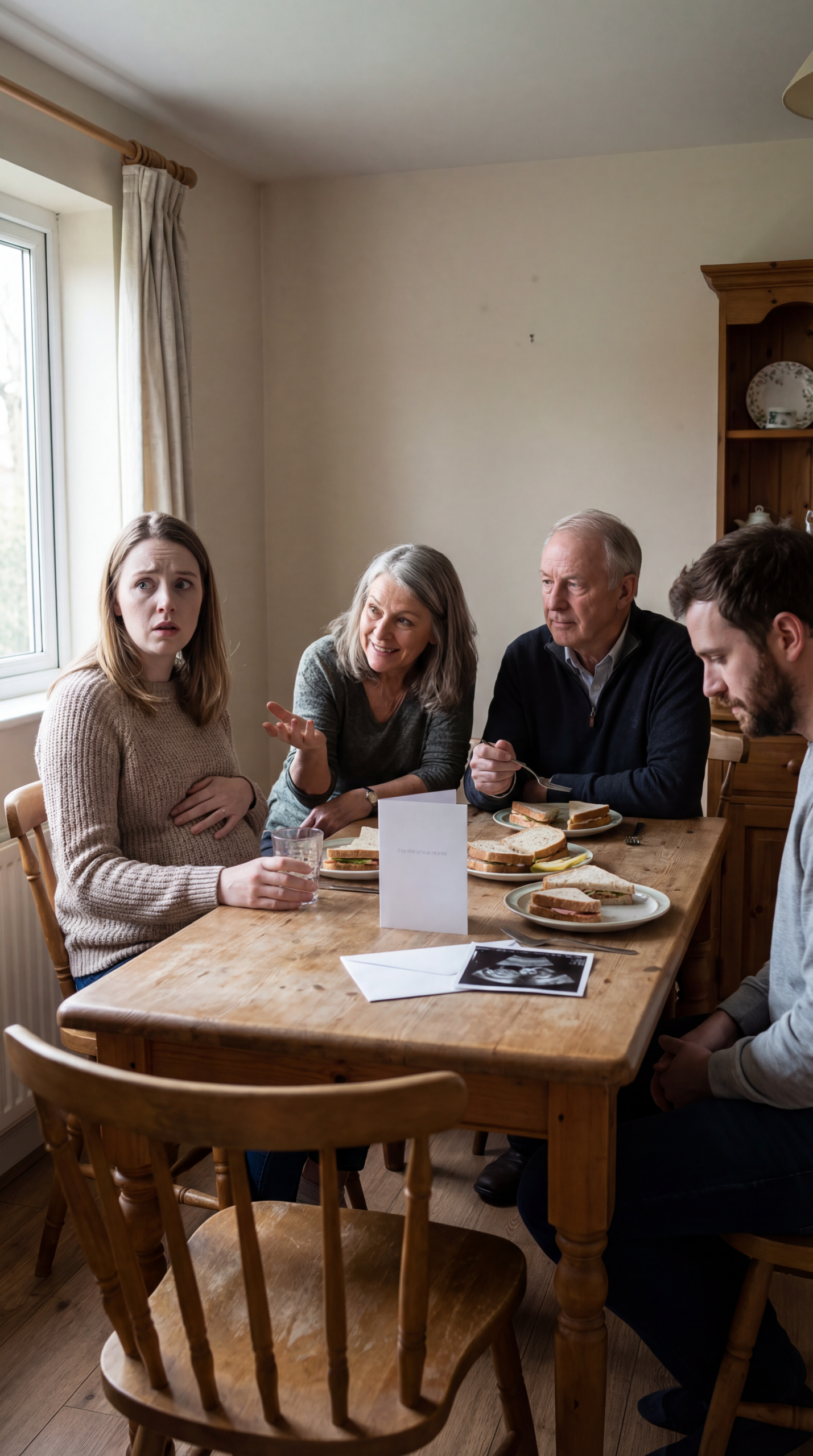
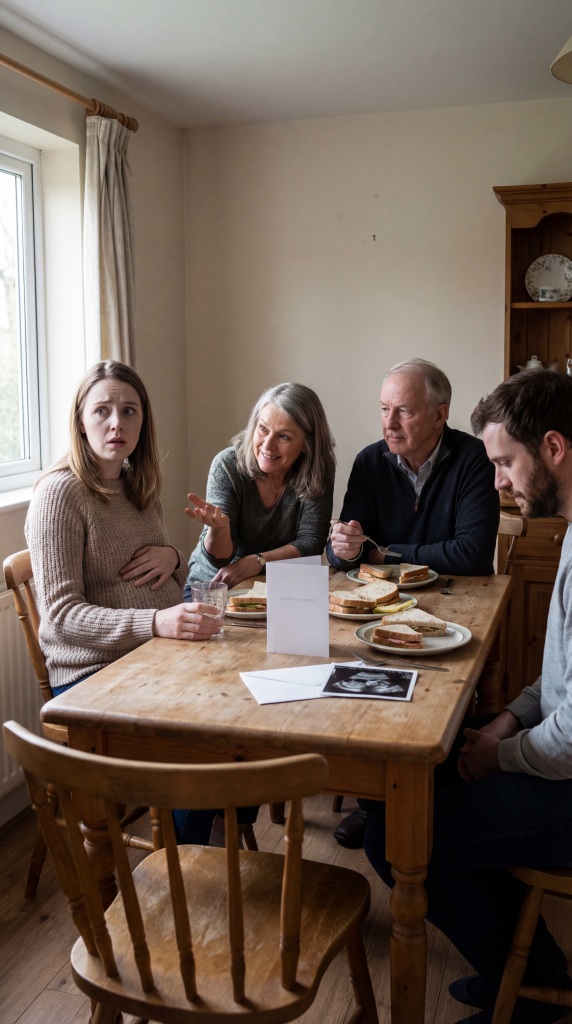
The truth came out at a Sunday lunch at my parents’ house last month. Evan and I had just announced the pregnancy. My parents were over the moon—well, as over the moon as they are capable of being about someone who isn’t Adam. My mom immediately started talking about “our first grandchild” (my brother and his wife are childfree by choice, something my parents quietly resent). My dad opened a bottle of champagne “for everyone except mama-to-be.”
We were sitting at the table, and my mom started reminiscing.
“Having two kids is such a blessing,” she said. “Especially when they’re as close as you two are.”
I nearly choked. My brother and I are not close. We’re polite. We text on holidays. That’s about it.
She laughed and added, “And it gave us such peace of mind after what happened with Adam.”
“Peace of mind?” I asked. “What do you mean?”
She waved a hand. “Oh, you know. Knowing you were there if—God forbid—anything ever happened again. The doctors said after his infection that having a full-sibling donor is always best if there are complications. We were so relieved when you were a match.”
There was a ringing in my ears. “A match for what?”
“For marrow, organs, whatever,” my dad said casually, as if talking about matching curtains. “You know, transplant compatibility. They said the odds are better with a full sibling. It gave us a lot of comfort when you were born.”
“You had another baby,” I said slowly, “so you’d have a backup donor for Adam?”
My mom frowned. “Don’t put it that way. Of course we wanted another child. But after what we went through, it would’ve been irresponsible not to think about it. And when we found out you were a match, it just confirmed that it was the right decision.”
Evan put his hand on my leg under the table. I realized my hands were shaking.
“So,” I said, “if Adam had needed a transplant, you would have… what? Just handed me over?”
“Handed you over?” My mom looked offended. “We would have done what was medically necessary to save your brother. You wouldn’t have even remembered it. Besides, you should be proud. That’s what family is for, taking care of each other.”
“Family is for… being spare parts?” I asked.
My dad sighed. “You’re being dramatic. It never came to that, so why are you upset?”
A dozen small memories clicked into place:
- Being told as a kid that I had to “keep myself healthy” because “Adam might need you someday.”
- Being guilted for wanting to play a contact sport because “what if you get hurt and can’t help your brother?”
- The weird, intense way my parents reacted any time I mentioned being squeamish about needles or hospitals. “You need to get over that. You might need to be brave for Adam one day.”
- The fact that I was never allowed to move far away for college. They pushed hard for the local university. “So we can all be together,” they said. Now I’m wondering if it was really “so you’ll be nearby if he needs you.”
I asked them, point blank: “If I hadn’t been a match, would you still have had me?”
My mom opened her mouth, closed it, looked at my dad. He said, “We didn’t know until you were here. But knowing you were compatible was… reassuring.”
They never said “no.” They never said “of course we wanted you for you.” They skirted around it with euphemisms like “insurance” and “peace of mind.”
I excused myself to the bathroom and had a silent panic attack on the edge of the bathtub. Evan knocked on the door, came in, and held me while I shook.
“I was never really their child,” I whispered. “I was their backup plan.”
We left shortly after. My parents were confused and a little annoyed that we “cut the visit short” after “such good news” (the pregnancy). I didn’t trust myself to speak without saying something nuclear.
On the drive home, I spiraled. Every memory of my childhood—every slight, every dismissal, every time my pain was inconvenient compared to Adam’s—slotted into the “backup child” framework.
When I broke my arm falling off the monkey bars at 9, my mom’s first question wasn’t “Are you okay?” It was “Is your arm really broken? Are they sure it won’t affect any future surgeries?” I remember that, clear as day now. At the time I thought she was just stressed. Now it feels like she was assessing damage to her spare.
When I got mono in high school, they were furious with me, not because I was sick, but because they were worried it might “compromise your immune system long-term.” They dragged me to extra specialists “to make sure everything’s still usable.” I thought they were being overprotective. Now I see the subtext.
I told Evan everything on the drive. He went from shocked, to angry, to eerily calm.
“What do you want to do?” he asked.
“I don’t know,” I said. “Scream? Throw up? Ask them why I was never enough as just their daughter?”
He squeezed my hand. “What about our baby?”
Our baby. That’s when something inside me solidified.
I pictured my child—the one kicking inside me right now—sitting at a table 30 years from now, learning that they were brought into this world as a tool, a backup, a means to an end. I pictured my parents cooing over them as “our first grandchild,” all while having used me as a hypothetical organ bank. And I felt something shift from hurt to rage.
I grew up feeling “less than.” I can’t stop what already happened to me. But I can sure as hell control what happens to my kid.
That night, I wrote my parents an email. I knew if I called, they’d talk over me or guilt trip me. I took my time, read it to Evan, revised it twice.
I told them:
- I understood now that I was conceived, at least in part, as a medical contingency plan for Adam.
- Their own words at lunch confirmed that my value to them was always tied to my usefulness to my brother.
- The positioning of that as “normal” parental concern was deeply disturbing.
- Their long history of dismissing my needs made sense in that context: I was never the priority.
- I was no longer willing to be in a relationship where I am valued primarily for what I can provide, rather than who I am.
Then I wrote the line that has detonated my family:
“Because of this, and because I will not allow my child to be treated as a resource or prop in your ongoing Adam-centric narrative, I have decided that you will not have a relationship with my children. You will not meet this baby. You are not entitled to access to the next generation after what you did to me.”
I told them I was going low contact effective immediately. That if, and only if, they were ever ready to genuinely acknowledge the harm, take full responsibility without excuses, and commit to real therapy, I might consider limited, supervised contact someday. But that I was not holding my breath.
I hit send at 11:47 PM. My hands were shaking so hard I had to put my phone down and walk away.
The explosion was, unfortunately, predictable.
At 6:12 AM, I had a three-paragraph email from my mother:
- She was “devastated” I’d “twisted a loving, responsible parenting decision” into something “sinister.”
- They “only ever wanted to protect” Adam and therefore the whole family.
- It was “ungrateful and cruel” of me to “weaponize” my pregnancy against them.
- “All parents want a healthy spare if something happens. We just had the courage to admit it. You should be grateful you could have helped your brother.”
She ended with: “You’re punishing us for something that never even happened. We never used you. Why can’t you focus on the fact that we loved you enough to want you at all?”
My father’s email was shorter and colder: “This is incredibly hurtful. You’re overreacting to a hypothetical. We will not beg for access to our grandchild, but you’ll have to live with the consequences of alienating your entire family.”
Then came the extended family circus.
Apparently, my parents immediately called my brother, their siblings, probably the neighbor’s dog, to tell them I was “cutting them off from their first grandchild over a misunderstanding.”
My aunt texted: “Honey, your parents are heartbroken. They told me you think you were some kind of organ donor baby? Where are you even getting that?”
I replied with a screenshot of my mom’s “peace of mind” comments from a text she’d sent me years ago when I was considering moving out of state and she said, “What if Adam needs you and you’re across the country?” I explained the lunch conversation.
My aunt’s response: “Okay, that’s… worse than I thought. But they’re older, from a different generation. They were scared. Don’t punish them for bad phrasing.”
Bad phrasing. Sure.
My brother called next. That was… enlightening.
“Look,” he said, “I always knew they were more protective of me. I didn’t know that, but like… it makes sense. After I almost died, they were traumatized. You’re blowing this out of proportion.”
“Did you know I was a match?” I asked.
He hesitated. “They mentioned it when you were a kid. I thought it was cool. Like, superhero sibling powers.”
“Cool,” I repeated. “It never occurred to you that having a kid so they can donate an organ is messed up?”
“It’s not like they had you in a lab,” he said. “You had a pretty good childhood. You’re acting like they kept you in a cage.”
A pretty good childhood. I swallowed that.
“You got college fully paid for,” I reminded him. “They said they couldn’t help me because ‘we only have enough for one.’”
“That’s just finances,” he said. “You can’t compare.”
“I can, actually,” I said. “I can compare a lot.”
He sighed. “So what, you’re going to punish them forever? Keep their grandchild away? That’s extreme. Therapy exists, you know.”
“I’m in therapy,” I said. “You should try it. But this boundary stands.”
He finally said it: “If you do this, you’re not just cutting them off. You’re cutting me off too. I’m not going to sneak pictures of your kid to them like some spy. Pick a different hill to die on.”
“This is my hill,” I said, and hung up.
Evan has been rock solid. He told me from the minute we left that lunch that whatever I decided, he’d back me up.
“They might never understand,” he said, “but our job is to protect our kid and your mental health. They already showed us exactly who they are.”
We talked it through with my therapist. She didn’t tell me what to do, but she validated the hell out of my feelings.
She helped me put words to what I’d been minimizing my whole life: medical commodification. Being viewed, from before birth, as a potential resource rather than a whole person. She pointed out that my parents still, to this day, refuse to see why that’s wrong.
“If they were able to say, ‘We were terrified, we made decisions out of fear, and in doing so we reduced you to a function. We are horrified now when we look back, and we’re so sorry,’ that would be one thing,” she said. “But they’re saying, ‘We did it on purpose and you should be grateful.’ That’s not just a difference in perspective. That’s a fundamental lack of empathy.”
She also pointed out something that hit me hard: my parents already created one generation where one child existed to serve another. Why would they suddenly stop that dynamic with grandchildren?
I remembered my mom joking (ha ha) a few months ago when I told her we were thinking about having two kids: “Make sure the first one is sturdy so the second one can be the backup!” I’d laughed awkwardly at the time. Now it makes me nauseous.
So here we are. I’m halfway through my pregnancy. My nursery Pinterest board is full. Our baby has a name. My parents have never seen an ultrasound. They don’t know the due date. They text occasionally with things like, “Hope you’re well” and “We’re always here when you’re ready to talk.” My dad sent one genuinely kind message about hoping my pregnancy is smooth. My mom sends guilt trips disguised as concern.
I’ve muted them. I’m not ready.
The rest of the family is split. Some think I’m being dramatic and “robbing” my child of grandparents. Others (quietly) say, “If I found out that about my parents, I’d never speak to them again either.”
I don’t know what the future holds. Maybe in five years, maybe ten, there will be a conversation where my parents actually get it. Maybe not. Maybe my child will grow up with one set of grandparents instead of two. That’s okay. I’d rather them have fewer grandparents than grandparents who view people as tools.
My parents think I’m cruel. But the older I get, the more I think cruelty is bringing a human into the world as an insurance policy and then acting offended when they resent it.
I didn’t ask to be born. I definitely didn’t ask to be born as a backup.
But I did choose to become a mother. And I choose to break this pattern.
My child will never wonder if they were “Plan B” for someone else’s life. They will never be told they have to keep themselves “donation-ready.” They will never be guilted into thinking their existence is justified by what they can provide.
If that means my parents never hold them, that’s a consequence of their choices, not mine.
So yes, I told my parents they’ll never meet their grandkids. They think it’s a punishment. To me, it’s protection.