Let me take you back to where this all began, because understanding the full context makes what happened even more incomprehensible.
The Loss That Changed Everything
Three years ago, my husband Jake and I experienced what felt like the darkest moment of our lives. After trying to conceive for nearly two years, we finally saw those two pink lines. The joy was indescribable. We were cautious, of course, waiting until the twelve-week mark to share our news with family. At our ten-week appointment, we went in expecting to hear a heartbeat and leave with our first clear ultrasound photo.
Instead, we left with shattered dreams and a medical term I never wanted to learn: missed miscarriage.
The baby had stopped developing at eight weeks, but my body hadn’t recognized the loss. I remember sitting in that cold examination room, watching the ultrasound technician’s face change from professional cheerfulness to carefully controlled sympathy. The silence in that room was deafening. No heartbeat. No flutter of movement. Just stillness where life should have been.
We left with one ultrasound photo. One single image that represented both our brief moment of hope and our crushing loss. I kept it in a memory box along with the positive pregnancy test, a journal I’d started writing to our future baby, and a tiny pair of booties my mother-in-law had secretly bought us.
The Complicated Sister Dynamic
My sister Melissa and I have always had a complicated relationship. She’s three years younger than me, and growing up, there was always an unspoken competition between us. Where I was academic and reserved, she was social and outgoing. Our parents never played favorites overtly, but there was always this undercurrent of comparison.
When I got married at twenty-eight, Melissa made comments about how I was “rushing into things” even though Jake and I had been together for four years. When she got married a year later after a whirlwind six-month romance, suddenly marriage was “just knowing when you know.”
But I genuinely tried to be supportive. I was her maid of honor. I helped plan her bachelorette party. I pushed down any complicated feelings and showed up as the sister I wished we could always be to each other.
After my miscarriage, Melissa’s response was… minimal. A text that said, “Sorry to hear that. You can always try again.” No phone call. No visit. When I tried to talk to her about it at a family dinner a month later, she changed the subject to her new job promotion. I told myself she just didn’t know how to handle grief. Some people aren’t good with heavy emotions, right?
The Fertility Journey Divergence
What made our relationship even more strained was what came next. While Jake and I struggled through fertility treatments, doctor’s appointments, and the emotional roller coaster of hope and disappointment, Melissa seemed to get pregnant without even trying.
Eighteen months after my miscarriage, she announced at a family brunch that she was expecting. I was genuinely happy for her—or at least I tried to be. Happiness mixed with that hollow ache of “why not me?” that anyone who’s experienced infertility understands. I smiled. I hugged her. I asked all the right questions about due dates and whether they’d find out the gender.
But inside, I was screaming.
Her pregnancy was textbook perfect. No morning sickness. That “glowing” everyone talks about. She documented every single moment on social media. Every week, there was a new bump photo, a new milestone, a new reason to celebrate. I had to mute her accounts because seeing them felt like a knife twisting in an already open wound.
I attended her baby shower. I bought gifts from her registry. I showed up to the hospital when she gave birth to a healthy baby boy, my nephew Connor. And I meant it when I said he was beautiful. Because he was, and none of what I was feeling was his fault.
The Second Pregnancy
A year after Connor was born, Jake and I finally got our miracle. After three rounds of IVF, countless injections, and more money than I want to calculate, I was pregnant. This time, we made it past the twelve-week mark. Then the twenty-week anatomy scan. Then the third trimester. We told our families early this time—we’d earned the right to celebrate, and we needed their support through the anxiety.
Our daughter Emma was born healthy and perfect, and for a while, life felt balanced again. The trauma of loss didn’t disappear, but it shifted into something I could live with. I had my rainbow baby. I had healed, or so I thought.
Melissa and I existed in a cordial but distant relationship. We saw each other at family events. Our kids played together. We exchanged pleasantries and kept things surface-level. It wasn’t the sister relationship I’d once hoped for, but it was manageable.
The Discovery
Then came last month. My phone started blowing up with notifications. Facebook messages, Instagram DMs, texts from friends asking if I’d seen Melissa’s post. My stomach dropped before I even opened social media. I had that instinctive feeling that something was very wrong.
When I pulled up Facebook, the first thing I saw was Melissa’s post with hundreds of likes and comments already. “We’re adding another little one to our family! Baby number 2 coming this fall! 💙💙💙”
But it was the photo that made my blood run cold.
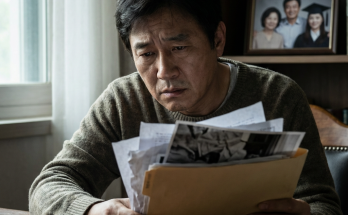
It was MY ultrasound photo. The one from my miscarriage. The image I’d kept private, tucked away in a memory box with other painful reminders of what I’d lost. There was no mistaking it—I had stared at that photo through tears enough times to recognize every pixel. The date stamp, the measurements, even the clinic’s logo in the corner. It was unmistakably from my ten-week appointment three years ago.
Someone had clearly edited it—cropped the image, adjusted the brightness, removed some of the clinical information. But it was mine. My lost baby’s only photograph, being used to announce someone else’s pregnancy.
I called her immediately. My hands were shaking so hard I could barely hold the phone.
“Melissa, that’s my ultrasound photo. From my miscarriage. How did you even get that?”
There was a long pause. Then, in a tone that was somehow both defensive and dismissive, she said, “Oh, I found it when I was helping Mom clean out some old photo boxes at her house. I didn’t think you’d mind. It’s just an ultrasound—they all look the same anyway. And I couldn’t find my early ultrasound photos, and I wanted the announcement to be perfect.”
Just an ultrasound. They all look the same anyway.
I couldn’t breathe. “That was my baby, Melissa. The baby I lost. You used a photo of my dead child to announce your pregnancy. How could you think that was okay?”
“You’re being dramatic,” she said. “It’s been three years. You have Emma now. Why does one old photo matter so much? You’re acting like I did something terrible when I just borrowed a picture.”
Borrowed. Like it was a cup of sugar or a book.
The Family Fallout
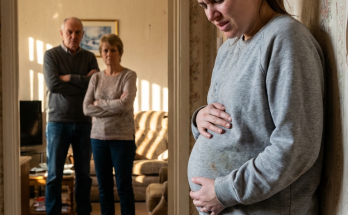
I wish I could say my family immediately rallied around me, but the reality was much more complicated. When I called my mother in tears, her first response was, “Oh honey, I’m sure she didn’t mean any harm. You know how Melissa is—she doesn’t always think things through.”
Doesn’t always think things through. As if using a dead baby’s ultrasound photo was just an innocent oversight.
My father suggested I was “making a bigger deal out of it than necessary” and that I should “just let it go for the sake of family peace.” My brother stayed completely out of it, saying he “didn’t want to get involved in sister drama.”
Only my husband Jake and my mother-in-law understood the gravity of what had happened. Jake was furious on my behalf in a way that made me feel seen and validated. My mother-in-law, who had held my hand through the miscarriage, called Melissa directly and demanded she take down the post.
But Melissa refused. Her argument was that she’d already gotten so many congratulations comments and didn’t want to look “crazy” by deleting such a popular post. She offered to “give me credit” for the photo if that would make me feel better, completely missing the point that this wasn’t about credit or acknowledgment—it was about the profound violation of using my loss for her gain.
The Social Media Storm
As word spread about what had actually happened, Melissa’s post took on a life of its own. Some mutual friends who knew my history started commenting, asking pointed questions about the photo. A few people called her out directly. Others sent me private messages expressing their horror at what she’d done.
Melissa’s response was to double down. She posted a follow-up saying that people were “spreading rumors” and “trying to ruin her pregnancy announcement.” She painted herself as the victim, claiming I was jealous of her pregnancy and trying to make everything about me.
The cognitive dissonance was staggering. She had literally used my tragedy for her announcement, but somehow I was the one making it about me?
Eventually, after her post had been up for three days and the comment section had devolved into arguments between people defending her and people calling out her behavior, she finally deleted it. Not because she understood what she’d done wrong, but because the negative attention was affecting her image.
She never apologized. Not really. She sent a text that said, “Sorry you got so upset about the photo. I’ll use a different one.” As if my reaction was the problem, not her action.
Processing the Violation
I’ve spent the last few weeks trying to understand how someone could do something so profoundly hurtful. Therapists call it a “secondary trauma”—when someone takes your original trauma and weaponizes it, intentionally or not, creating a new layer of pain.
Every time I think about it, I feel sick. That photo represented the only tangible evidence I have that my first baby existed. It was precious to me not despite the pain it represented, but because of it. That loss shaped me. It was part of my story, my journey to motherhood, my understanding of how fragile and precious life is.
And Melissa took it. Edited it. Used it for social media engagement. Reduced my profound loss to a convenient prop for her perfect pregnancy announcement.
What hurts almost as much as the initial violation is the lack of understanding from my family. The expectation that I should just get over it. The subtle implication that I’m being oversensitive or holding a grudge. The way they want to sweep it under the rug because dealing with the reality of what happened would require them to acknowledge that Melissa did something genuinely cruel.
The Broken Trust
Here’s what I’ve realized through all of this: even if Melissa had apologized—really apologized—I don’t know if I could ever trust her again. This wasn’t a simple mistake. This was a series of choices.
She chose to take the photo from my mother’s house. She chose to edit it. She chose to post it publicly. She chose to keep it up even after I called her in tears. She chose to defend her actions instead of acknowledging my pain. She chose her social media image over her sister’s trauma.
Each of those choices revealed something about who she is and how little she values our relationship. You don’t accidentally use your sister’s miscarriage ultrasound for your pregnancy announcement. You don’t accidentally dismiss her pain. You don’t accidentally prioritize Instagram likes over basic human decency.
Moving Forward Without Resolution
I’ve had to accept that I may never get the apology I deserve. Melissa may never understand why what she did was so wrong. My parents may never stop making excuses for her behavior. And that’s a different kind of loss—the loss of the family dynamic I wished we could have.
I’ve set boundaries now. I’m civil at family gatherings for the sake of my daughter, who shouldn’t have to navigate adult conflicts. But I’m not pretending everything is fine. I’m not performing closeness for the comfort of others. I’ve stopped setting myself on fire to keep everyone else warm.
Jake and I have started discussing whether we want to continue attending every family event or whether it’s healthier to create some distance. We’re prioritizing our immediate family—Emma, each other, and the people who have shown up for us with real support and understanding.
I’ve also learned that not everyone deserves access to your story. The memory box with my ultrasound photo? It’s in a locked safe now. My personal photos? Backed up and password-protected. I’ve become more guarded, more protective of my privacy and my pain. I hate that I’ve had to, but this experience taught me that even family can’t always be trusted with your most vulnerable moments.
What This Taught Me About Grief
If there’s any silver lining in this nightmare, it’s that it’s taught me important lessons about grief, boundaries, and the complexity of family relationships. I’ve learned that you can grieve the loss of a pregnancy and simultaneously grieve the loss of the sister relationship you thought you had. Both losses are valid. Both deserve to be honored.
I’ve learned that some people will never understand miscarriage unless they’ve experienced it themselves. They’ll see it as something that happened years ago that you should be “over by now,” not understanding that grief doesn’t work on anyone else’s timeline.
I’ve learned that forgiveness doesn’t require reconciliation. I can choose to release my anger without choosing to restore the relationship to what it was. I can wish Melissa well from a distance while also protecting myself from further harm.
Most importantly, I’ve learned to trust my instincts about what treatment I deserve. When people tell you you’re being too sensitive, that you should let things go, that you’re overreacting—sometimes they’re wrong. Sometimes your reaction is exactly proportional to the violation you experienced. Sometimes you’re not being dramatic; the situation actually is that bad.
The Pregnancy That Started All This
The cruelest irony in all of this? I genuinely would have been happy for Melissa’s pregnancy under normal circumstances. Despite our complicated relationship, despite the past hurts, I don’t wish her any harm. I hope she has a healthy pregnancy and a healthy baby.
But she took what could have been a moment of complicated-but-genuine happiness and turned it into something I’ll forever associate with violation and betrayal. Every time I think about this pregnancy, I won’t think about a new niece or nephew joining the family. I’ll think about seeing my miscarriage ultrasound repurposed for her announcement. I’ll think about her dismissing my pain. I’ll think about how easily she disregarded something sacred to me.
That’s what makes this so unforgivable. She didn’t just hurt me—she permanently altered how I’ll relate to her children, to family gatherings, to any future attempts at reconciliation. She created a chasm that I don’t know can ever be bridged.
To Anyone Going Through Something Similar
If you’re reading this because you’ve experienced something similar—whether it’s someone using your loss for their gain, family members dismissing your pain, or dealing with the complicated grief of both a miscarriage and a betrayal—I want you to know that your feelings are valid.
You’re not being too sensitive. You’re not overreacting. You’re not holding a grudge. You’re processing a legitimate violation, and you deserve to take all the time you need to work through it.
You don’t owe anyone forgiveness, reconciliation, or a relationship that continuously harms you. You don’t have to set yourself on fire to keep the family peace. You’re allowed to prioritize your healing over other people’s comfort.
And to anyone who has experienced miscarriage: your loss matters. Your baby mattered. That ultrasound photo, those pregnancy tests, those journal entries, those tiny clothes you bought—they’re not “just things.” They’re precious evidence that your child existed, that your love existed, that your hope existed. You get to decide who has access to those items and memories. You get to protect them fiercely.
Your pain doesn’t have an expiration date. Your grief doesn’t need to be convenient for others. And anyone who treats your loss as insignificant or disposable is showing you exactly who they are. Believe them.
The Unanswered Questions
I still don’t know exactly how Melissa got that photo. My mother claims she doesn’t remember putting it in any photo boxes, and I believe her—she wouldn’t have knowingly done something to facilitate this. The most likely explanation is that I’d shared the photo with my parents right after the miscarriage in a moment of raw grief, and somehow it ended up mixed in with other family photos over the years.
But that doesn’t answer the bigger question: even if Melissa genuinely didn’t realize it was specifically my miscarriage photo at first glance, how did she not stop once I told her? How did her brain justify keeping it up? How did she rationalize using someone else’s ultrasound photo at all, regardless of whose it was?
These questions keep me up at night. Not because I expect answers, but because they reveal something fundamental about empathy, or the lack thereof. They reveal a self-centeredness so profound that even direct confrontation couldn’t penetrate it.
Where I Am Now
It’s been a month since all of this happened. Melissa had her baby shower last week. I didn’t attend. I sent a gift from her registry because I’m not trying to punish an innocent baby, but I couldn’t bring myself to sit in a room celebrating her while this wound is still so fresh.
My family is disappointed in me. They think I’m letting one incident destroy the family dynamic. But here’s what they don’t understand: this isn’t one incident. This is the culmination of years of dismissiveness, competition, and lack of basic respect. The ultrasound photo was just the moment that made all of it impossible to ignore anymore.
I’m in therapy now, working through not just this specific trauma but the larger patterns in my family relationships. I’m learning to advocate for myself. I’m learning that it’s okay to be the “difficult” one if being easy means accepting unacceptable treatment.
Emma is three now, blissfully unaware of the adult drama swirling around her. When she asks why we don’t see Aunt Melissa as much anymore, I tell her age-appropriate truths: “Sometimes grown-ups have disagreements, and we need some space to work through our feelings.” I won’t burden her with the details, but I also won’t model a relationship that teaches her to accept disrespect for the sake of keeping peace.
What I Want People to Understand
If you take nothing else from this story, understand this: miscarriage is not a minor medical event that people just “get over.” It’s the loss of a child, of hopes, of dreams, of a future you’d imagined. The physical recovery may take weeks, but the emotional recovery can take years.
Every ultrasound photo, every pregnancy test, every tiny item bought in hope—these are sacred artifacts of a life that existed, however briefly. They deserve to be treated with respect and reverence, not casually appropriated for someone else’s purposes.
And if someone trusts you with their grief, with access to these precious reminders of their loss, that trust is a gift. Violating it isn’t a small thing. It’s not a mistake. It’s a choice that reveals character.
I don’t know if Melissa will ever understand what she did. I don’t know if my family will ever stop making excuses for her. I don’t know if there’s a path forward that doesn’t involve permanent distance between us.
What I do know is that I deserve better. My loss deserves better. And I’m done apologizing for having boundaries that protect both.