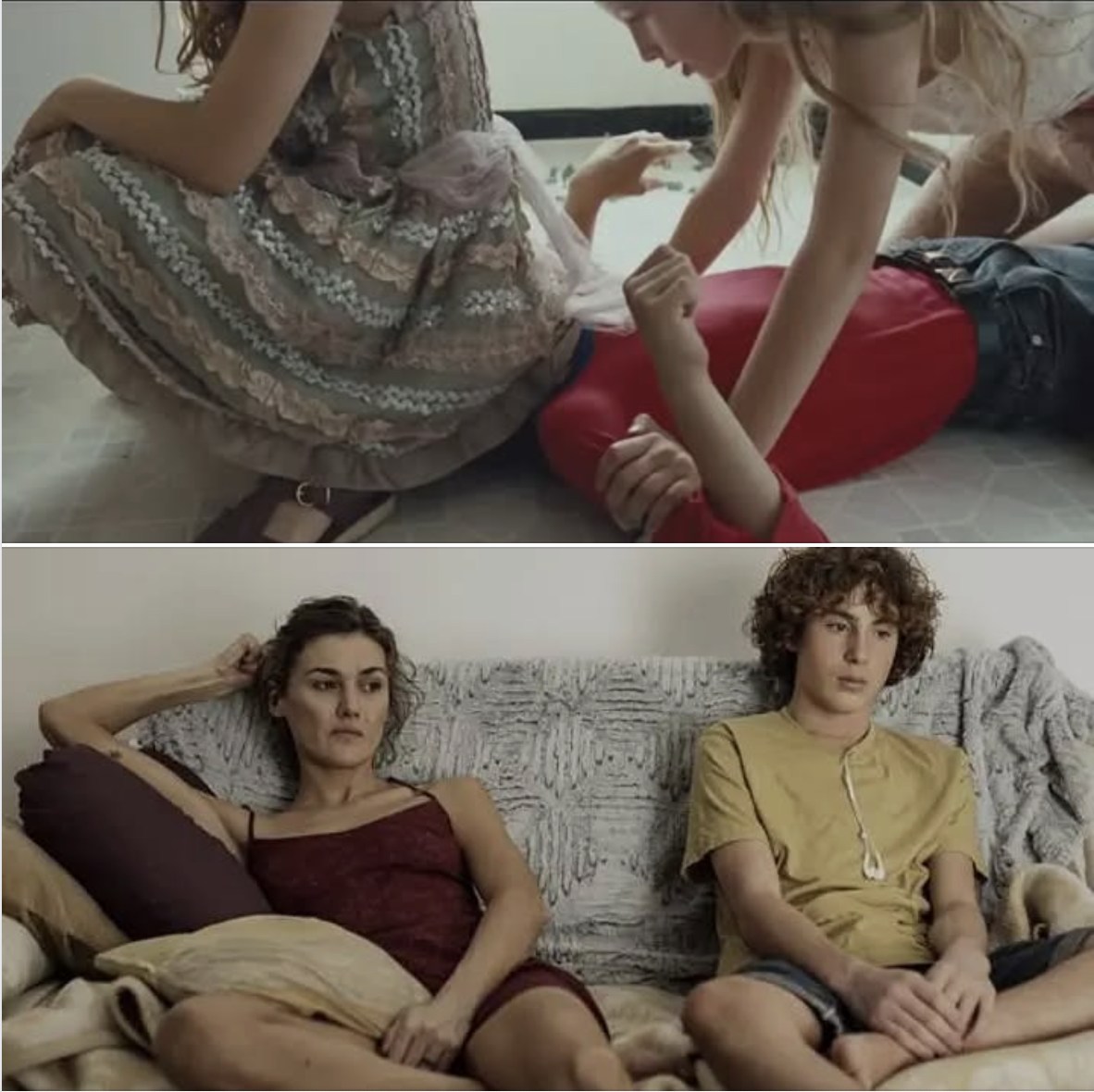
“Angela” (1995) is a hauntingly beautiful film that views the world through the fragile imagination of a child, turning darkness into poetry and pain into mystery. Directed by Rebecca Miller, the film follows ten-year-old Angela, who is convinced that she must save her troubled mother by protecting her from invisible forces of evil. What unfolds is a dreamlike journey through innocence, fear, and the thin line between fantasy and reality.

Miranda Stuart Rhyne delivers an astonishing performance, one that feels raw, intuitive, and deeply authentic. Her eyes carry both wonder and unbearable weight, reflecting a child’s pure love distorted by the chaos of the adult world. The film’s atmosphere is intimate and surreal—shadowy rooms, whispered secrets, and scenes that shift like memories rather than traditional storytelling.
Rather than explaining everything, “Angela” invites us to feel rather than understand. It captures the way children interpret trauma through imagination, creating their own rules and rituals in an attempt to make sense of the unexplainable. The cinematography is soft but unsettling, wrapping the viewer in a world that seems enchanted and cursed at the same time.
Beneath its delicate storytelling lies a powerful emotional truth: love can become a burden, and innocence can be a battlefield. The film’s quiet moments—small gestures, fragments of dialogue, empty spaces—speak louder than any dramatic twist. Its beauty lies in its restraint, its empathy, and its refusal to turn pain into spectacle.

“Angela” is not a conventional film—it’s an experience, a fragile dream preserved on screen. It lingers in the mind like a half-remembered story, full of shadows, tenderness, and heartbreaking humanity.