I never thought I’d be writing this, but I need to get this off my chest because my world has been turned upside down. What started as a normal evening with my best friend has spiraled into a nightmare that’s cost me a friendship I valued more than almost anything. The worst part? I’m being blamed for something I didn’t want and actively tried to avoid.
The Background of Our Friendship
Sarah and I have been best friends for nearly eight years. We met in college and instantly clicked—we were roommates, study partners, and eventually became each other’s maids of honor. When she met Derek five years ago, I was genuinely happy for her. He seemed like a decent guy: charming, successful, and seemingly devoted to Sarah. They got married three years ago in what felt like a fairytale wedding, and I stood by her side through it all.
Derek was always friendly toward me, maybe a bit more than necessary, but I chalked it up to him being naturally outgoing. Sarah never seemed bothered by it, so I didn’t think much of it either. Looking back now, I realize there were subtle red flags I should have noticed—lingering hugs that lasted a beat too long, comments about my appearance that seemed unnecessary, and the way he’d find excuses to be alone with me during group gatherings.
The Night Everything Changed
Three weeks ago, Sarah invited me over for dinner at their place. It was supposed to be a casual evening—just the three of us catching up over pizza and wine. Sarah had been stressed about a work project, and I wanted to be there to support her. The evening started normally enough. We ordered food, opened a bottle of wine, and settled in to watch a movie.
About halfway through the night, Sarah mentioned she wasn’t feeling well. She’d been fighting a cold all week, and the wine seemed to make her drowsier. She apologized and said she needed to lie down for a bit, assuring us she’d be back soon. I offered to leave, but she insisted I stay and keep Derek company. I felt slightly uncomfortable, but I didn’t want to make it awkward by insisting on leaving immediately.
After Sarah went upstairs, Derek refilled my wine glass—much fuller than I would have poured for myself. The conversation continued normally for about ten minutes, but then his demeanor shifted. He moved closer to me on the couch, closing the physical distance I’d been maintaining. I shifted away, but he didn’t seem to notice—or maybe he chose not to.
Then came the comments that made my stomach drop. He started by saying how much he “appreciated” having me around, how I was “different from other women,” and how he felt like he could “really talk” to me. I tried to redirect the conversation back to neutral topics, but he persisted. He mentioned that marriage wasn’t what he expected, that sometimes he wondered what his life would be like with someone who “understood him better.”
The Moment That Crossed Every Line
The situation escalated when he placed his hand on my knee. I immediately stood up, making an excuse about needing to use the bathroom. When I came back, I deliberately sat in the armchair across from the couch, creating physical distance. But Derek wasn’t deterred. He stood up and came over, kneeling beside the chair and looking up at me with what I can only describe as predatory intent.
“You know I’ve always been attracted to you, right?” he said quietly. My heart was racing. I told him firmly that this was inappropriate, that he was married to my best friend, and that I needed to leave. He grabbed my wrist—not hard enough to hurt, but firmly enough to keep me from standing. “Sarah doesn’t have to know,” he whispered. “We could just—”
I pulled my arm away forcefully and told him to never touch me again. I grabbed my purse and jacket and headed straight for the door. He followed me, suddenly switching tactics, saying I was “overreacting” and “misunderstanding” him. I didn’t respond. I got in my car and drove home, my hands shaking the entire way.
The Impossible Decision
I spent the entire night agonizing over what to do. Do I tell Sarah and risk destroying her marriage? Do I stay quiet and protect her from the painful truth? I knew that if the situation were reversed, I’d want to know. But I also knew how devastating this information would be for her. Sarah had always been so proud of her relationship, often posting about Derek on social media and talking about how lucky she was to have found “the one.”
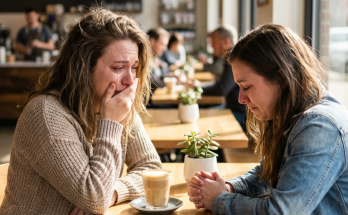
After two sleepless nights, I decided I had to tell her. She deserved to know what kind of man she was married to. I called her and asked if we could meet for coffee. I could hear the concern in her voice—she knew something was wrong. When we met the next day, I was a nervous wreck. I’d rehearsed what I was going to say a hundred times, but when the moment came, the words felt clumsy and inadequate.
I told her everything: the uncomfortable comments, the physical advances, the proposition. I watched her face transform from concern to confusion to anger—but the anger wasn’t directed where I expected. Instead of being furious with Derek, she turned on me.
The Accusation That Broke My Heart
“You’ve always been jealous of what Derek and I have,” she said coldly. I was stunned into silence. She continued, her voice rising: “You flirt with him every time you’re around. I’ve seen the way you dress when you come over, the way you laugh at all his jokes. And now you’re making up lies to try to break us up?”
I tried to defend myself, to explain that I would never do anything to hurt her, but she wouldn’t listen. She accused me of wearing “revealing clothes” that night (I was in jeans and a sweater), of drinking too much and “throwing myself” at her husband, and of fabricating the entire story because I was “bitter and alone.” Each accusation felt like a knife twisting deeper into my chest.
Sarah told me that Derek had already warned her this might happen. He’d apparently gone to her that same night and told her a completely different story: that I had made advances toward him, that he’d politely rejected me, and that I might retaliate by making false accusations. He’d positioned himself as the victim before I even had a chance to tell my side of the story.
The Aftermath and Fallout
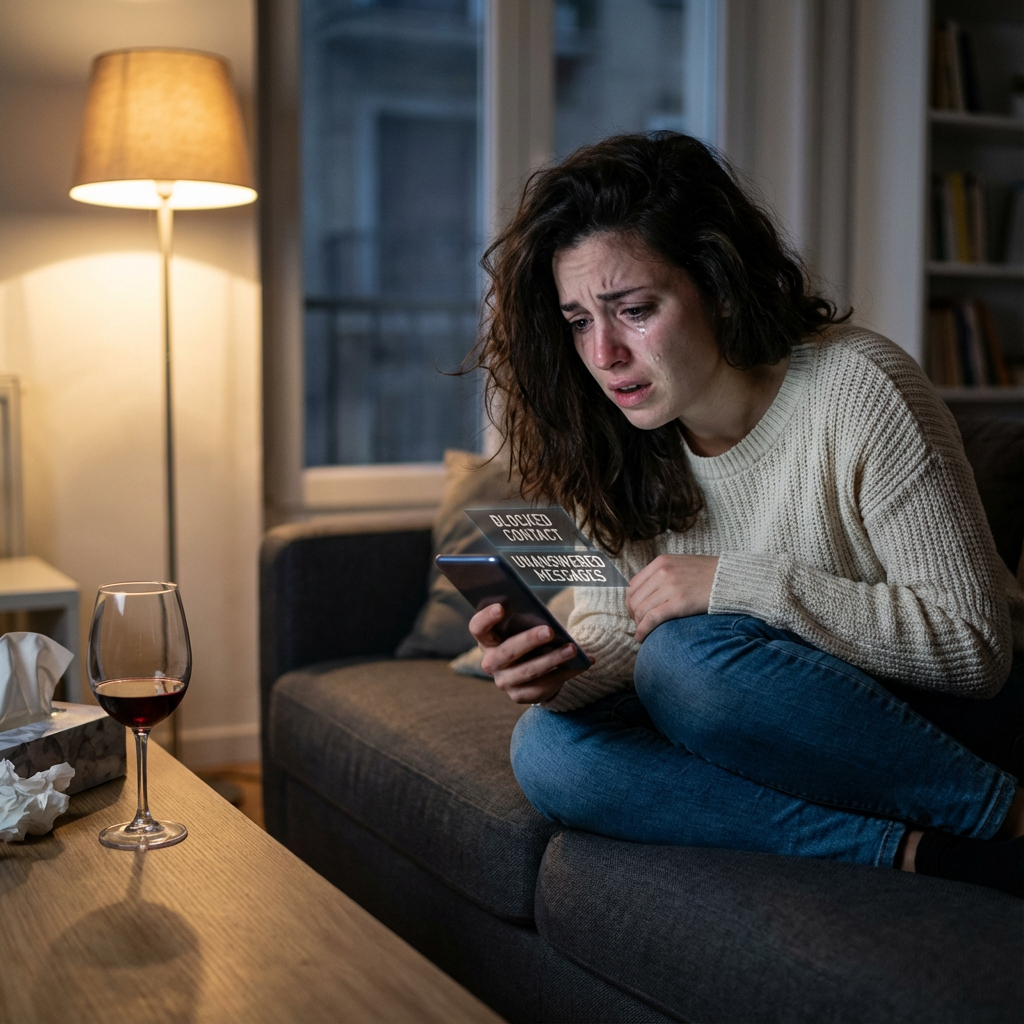
Sarah blocked me on all social media and told me never to contact her again. Within days, I started noticing that other friends—mutual friends from our circle—were treating me differently. Some stopped responding to my messages. Others sent brief, cold replies. I eventually learned that Sarah had shared her version of events with our entire friend group, painting me as a jealous, manipulative liar who tried to seduce her husband.
I lost more than just Sarah in this situation. I lost an entire community of people I’d known for years. Birthday party invitations stopped coming. Group chats went silent when I posted. I felt completely isolated and devastated. The injustice of it all was overwhelming—I’d done the right thing by telling the truth, and I was being punished for it while Derek faced no consequences.
Trying to Move Forward
I’ve spent the past three weeks trying to process everything that happened. I’ve questioned myself repeatedly: Should I have handled it differently? Could I have prevented this outcome? Was there any way to make Sarah believe me? The rational part of my brain knows I did the right thing. I was honest. I set boundaries. I protected myself and tried to protect my friend by giving her information she needed.
But the emotional part of me is still reeling from the loss. I miss my best friend. I miss the version of her who would have believed me, who would have stood by me, who would have confronted her husband instead of blaming the victim. I’m angry at Derek for putting me in this position, for being predatory and manipulative, and for successfully turning the narrative around to protect himself.
I’m also angry at Sarah, even though I know that anger is complicated by compassion. She’s in denial because accepting the truth would mean acknowledging that her marriage is built on a foundation of lies. It’s easier for her to believe that I’m the villain in this story than to confront the reality that the man she loves is capable of betrayal.
What I’ve Learned
This experience has taught me several painful but important lessons. First, setting boundaries is non-negotiable, even when it’s uncomfortable. The moment Derek made me uncomfortable, I should have left immediately, regardless of how it might have appeared to Sarah. I prioritized politeness over my own safety and comfort, and that was a mistake.
Second, predators are often skilled manipulators who lay groundwork for their defense long before they’re accused. Derek knew exactly what he was doing when he preemptively told Sarah his version of events. He understood that the first story people hear often becomes the truth they believe, regardless of evidence.
Third, victim-blaming is still alive and well, even among women, even among best friends. Sarah’s immediate response was to question my clothing, my behavior, my intentions—all classic victim-blaming tactics. It’s a sobering reminder that we still have a long way to go in terms of believing survivors and holding perpetrators accountable.
Where Things Stand Now
I’ve accepted that my friendship with Sarah may be over permanently. Part of me hopes that someday she’ll see Derek’s true character—whether through his behavior toward her or through him making advances toward someone else. But I can’t wait for that possibility. I have to move forward with my life.
I’ve been seeing a therapist to help process the trauma of both the incident with Derek and the loss of my friendship with Sarah. I’ve learned that what Derek did constitutes sexual harassment and that Sarah’s response, while hurtful, is a common reaction rooted in cognitive dissonance and self-preservation.
I’ve also started rebuilding my social circle, reaching out to people outside the friend group that Sarah and I shared. Some of them have been incredibly supportive. A few even admitted that they’d had uncomfortable experiences with Derek themselves but had never said anything because they didn’t think they’d be believed.
My Message to Others
If you’re reading this and you’ve experienced something similar, please know that you’re not alone. Being blamed for someone else’s inappropriate behavior is a special kind of trauma, and it’s okay to grieve the relationships you’ve lost as a result of speaking your truth.
You did the right thing by setting boundaries. You did the right thing by being honest. The fact that people don’t believe you or choose to blame you instead of holding the perpetrator accountable is not a reflection of your worth or your truthfulness. It’s a reflection of a culture that still protects predators and punishes victims.
To anyone who has a friend confide in you about being harassed or assaulted by their partner: please believe them. Your first instinct should not be to defend your partner or question your friend’s behavior. The statistics show that false accusations are extremely rare, while harassment and assault are disturbingly common. Choose to believe survivors. Choose to prioritize their safety over your comfort.
Final Thoughts
I don’t know what the future holds for Sarah and Derek’s marriage. I don’t know if she’ll ever realize the truth about her husband. What I do know is that I can’t control other people’s perceptions or choices. All I can control is how I respond to what happened and how I move forward from here.
I’m choosing to believe in my own truth, even when others don’t. I’m choosing to surround myself with people who respect boundaries and believe survivors. And I’m choosing to use this painful experience as an opportunity to become stronger, more resilient, and more committed to standing up for what’s right, even when it costs me dearly.
If Sarah ever reaches out, I’ll be here. But I’m not putting my life on hold waiting for that day. I deserve friendships built on trust, respect, and mutual support—and I’m committed to finding and nurturing those connections going forward.
To everyone navigating similar situations: your truth matters. Your safety matters. And you deserve to be believed.