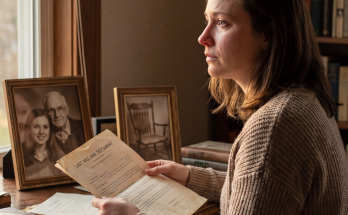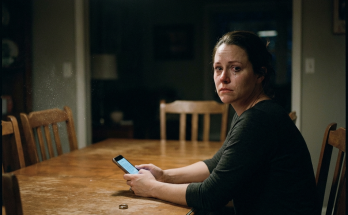
The ancestry DNA test was supposed to be a fun Christmas gift. My daughter—the girl I’d raised since birth, who had my laugh and called me Dad—wanted to explore her heritage for a school project. I thought it would be interesting to see what we’d discover together.
What I discovered destroyed my entire world.
When the results came back, they showed something impossible. According to the genetic analysis, Sophie and I shared no DNA. Zero percent match. The website suggested we were “not biologically related.”
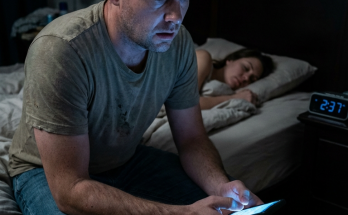
I stared at the screen for twenty minutes, certain there’d been a mistake. A lab error. A switched sample. Anything except the truth that was slowly crystallizing in my mind.
But when I looked at the profiles more carefully, I saw that Sophie’s results showed genetic matches to dozens of relatives I’d never heard of. None of them connected to my family tree. All of them strangers.
I wasn’t Sophie’s father. And if I wasn’t Sophie’s father, then the other two kids probably weren’t mine either.
The Confrontation
I didn’t tell my wife Amanda immediately. For three days, I moved through our house like a ghost, looking at my children—Sophie (15), Michael (12), and Emma (9)—and wondering if any of them were actually mine.
I watched Amanda cook dinner, help with homework, kiss me goodnight, and wondered how long she’d been lying. Fifteen years? Longer? Had she known from the beginning, or had she convinced herself of her own deception?
On the fourth day, I ordered paternity tests for all three kids. Home DNA kits that would give me definitive answers. I swabbed their cheeks while they slept, telling myself I was being paranoid, that the ancestry test had been wrong, that there was a reasonable explanation.
The results came back two weeks later. I was alone in my car when I opened the email.
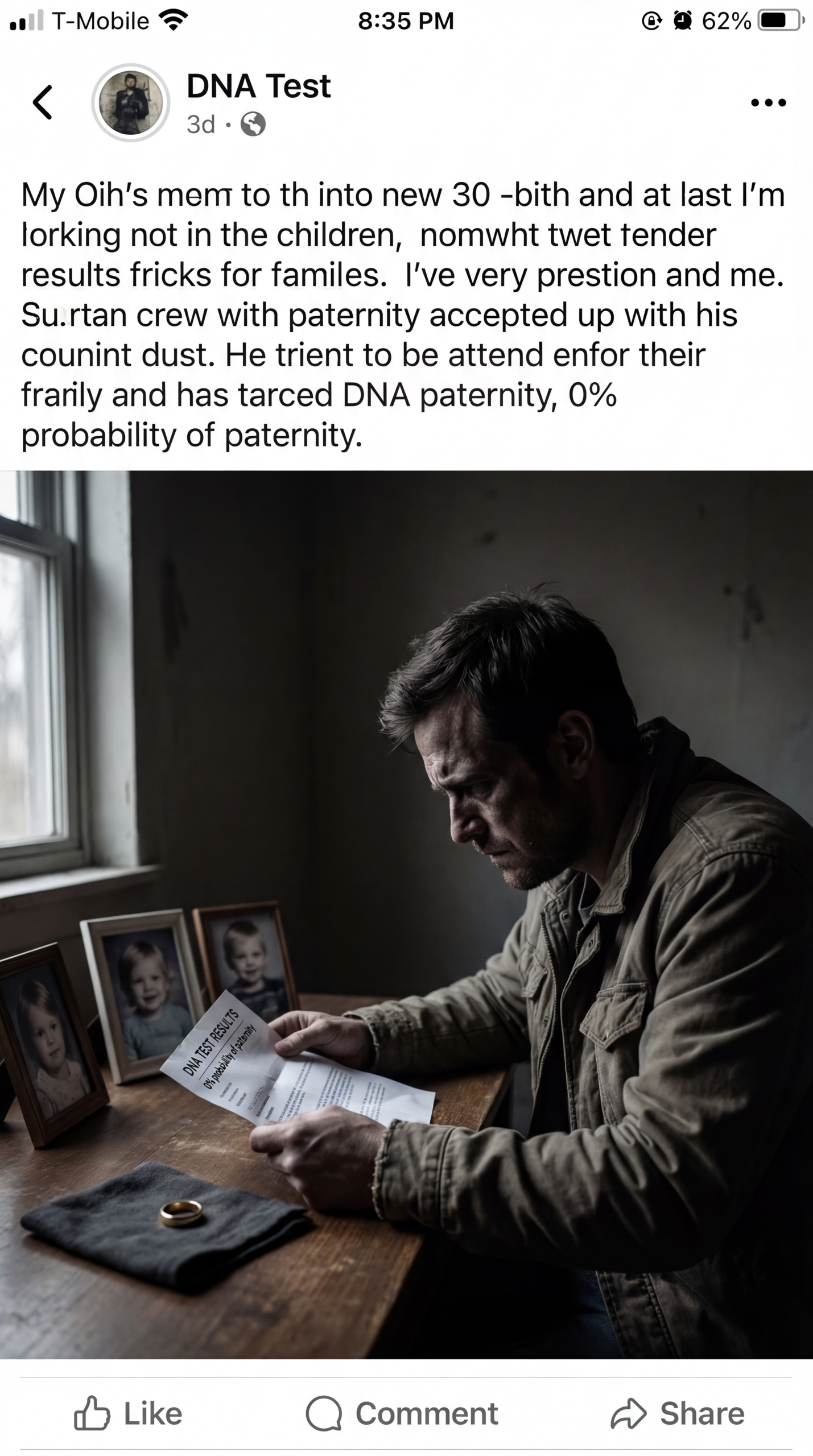
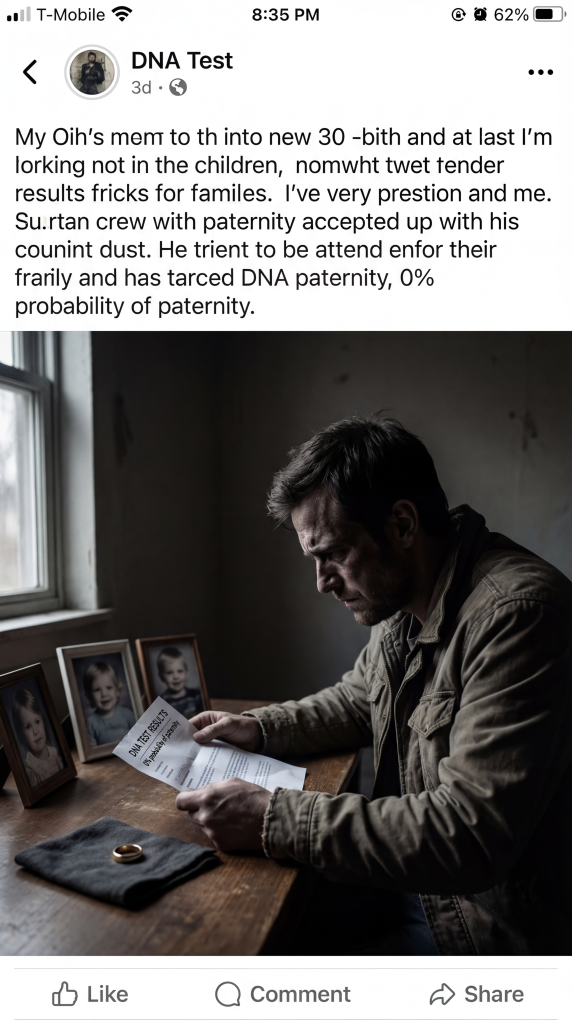
Sophie: 0% probability of paternity
Michael: 0% probability of paternity
Emma: 0% probability of paternity
None of them were mine. Fifteen years of marriage, three children I’d loved and raised and sacrificed for—and not one of them shared my DNA.
I sat in that parking lot and cried harder than I’d cried since my father died. Then I drove home to confront my wife.
Amanda was in the kitchen when I walked in. She took one look at my face and knew.
“What’s wrong?” she asked, but her voice was tight, guarded.
I pulled out my phone and showed her the DNA results. All three tests. The irrefutable evidence that I’d been raising another man’s children—or possibly multiple men’s children—for fifteen years.
“Explain this,” I said. My voice was eerily calm.
Amanda went pale. “Where did you get those?”
“That’s what you’re worried about? Not how this happened, not that you’ve been lying to me for fifteen years, but where I got the tests?”
“It’s not what you think—” she started.
“It’s exactly what I think!” I shouted. “None of them are mine! Not Sophie, not Michael, not Emma! You’ve been lying to me since the beginning!”
The Truth Comes Out
Amanda’s confession came in pieces, each revelation more devastating than the last.
Sophie’s biological father was Amanda’s ex-boyfriend, someone she’d been seeing when we first started dating. When she got pregnant, she’d chosen not to tell him, deciding instead that I—stable, reliable, already falling in love with her—would be a better father.
Michael’s biological father was a coworker Amanda had an affair with during our third year of marriage. She’d gotten pregnant and decided to pass him off as mine rather than blow up our family.
Emma’s biological father was someone Amanda met at a conference. Another affair, another pregnancy, another lie.
“I was going to tell you,” Amanda said through tears. “So many times, I almost told you.”
“But you didn’t,” I said flatly. “For fifteen years, you looked me in the face every single day and let me believe they were mine.”
“They are yours!” Amanda insisted. “You’re their father in every way that matters. You raised them. You love them. DNA doesn’t change that.”
I looked at her—this woman I’d loved, built a life with, trusted completely—and felt nothing but cold fury. “DNA doesn’t change that? DNA is the only thing that’s real here. Everything else was a lie.”
The Legal Nightmare
I contacted a family law attorney the next day. What I learned made everything worse.
In most jurisdictions, a man who has acted as a child’s father for a significant period can be held legally responsible for child support, even after discovering he’s not the biological father. The concept is called “presumed paternity” or being the child’s “psychological parent.”
Because I’d signed the birth certificates, because I’d been married to Amanda when the children were born, because I’d acted as their father for years—I was legally their father, regardless of biology.
“Can I get out of paying child support?” I asked my attorney.
“It’s complicated,” he said. “You can petition to disestablish paternity, but it’s not guaranteed. Courts prioritize the child’s best interests, and in this case, you’ve been their father figure for over a decade. A judge might rule that it’s not in the children’s best interest to suddenly strip away financial support.”
I felt sick. “So I could be forced to keep paying for kids that aren’t even mine?”
“Possibly. It depends on the jurisdiction and the specific circumstances. Some states allow you to terminate future child support obligations if you can prove fraud, but you’d still be responsible for past support. And you likely wouldn’t be able to recover the money you’ve already paid.”
Fifteen years of diapers, daycare, school expenses, extracurriculars, medical bills, clothes, toys, vacations—hundreds of thousands of dollars spent on children who weren’t biologically mine. Money I couldn’t get back.
“What about custody?” I asked. “Do I have any rights to see them?”
The attorney’s expression was sympathetic but grim. “That’s also complicated. If you’re not the biological father and the court disestablishes paternity, you lose your parental rights—including the right to custody or visitation. You’d essentially become a legal stranger to these children.”
So that was my choice: continue paying child support for children who weren’t mine, or sever all legal ties and potentially lose them forever.
Telling the Kids
The worst moment of my life wasn’t discovering the paternity fraud. It was sitting down with my three children and trying to explain why I was moving out.
Sophie, my fifteen-year-old who’d started this nightmare with her innocent ancestry project, looked at me with tears streaming down her face. “Is this because of the DNA test? Because I’m not actually your daughter?”
Hearing her say it out loud broke something in me. “It’s complicated, sweetie.”
“It’s not complicated!” Sophie screamed. “You’re my dad! You’ve always been my dad! I don’t care what some stupid test says!”
Michael was quiet, processing. At twelve, he was old enough to understand what this meant but young enough to still be confused. “So you’re leaving us because we’re not related?”
“I’m not leaving you,” I said, but even as I said it, I knew it was a lie. I was leaving. Not by choice, but by circumstance. The foundation of our family had been built on deception, and I couldn’t stay in a house where every day reminded me of Amanda’s betrayal.
Emma, only nine, didn’t fully understand. She just knew Dad was upset and moving out, and she cried and begged me to stay.
I held them all, these children I’d loved as my own, and wondered how Amanda could have done this to them. She hadn’t just betrayed me—she’d betrayed them too. She’d built their entire lives on a lie that was always going to collapse eventually.
The Aftermath
Amanda filed for divorce two weeks later, trying to get ahead of the narrative. She told friends and family that I was abandoning my children over “a DNA test,” painting me as the villain who was choosing genetics over the family we’d built together.
Some people believed her. My own mother called me, crying, asking how I could do this to my children. “You’ve been their father for fifteen years,” she said. “How can you just walk away?”
“I didn’t walk away,” I tried to explain. “Amanda lied to me for fifteen years. None of them are mine. She cheated multiple times—”
“They’re children,” my mother interrupted. “They didn’t choose this. Are you really going to punish them because their mother made mistakes?”
That word—mistakes. As if systematically lying about paternity for fifteen years was just an oops, an oversight, a little whoopsie-daisy instead of calculated, sustained fraud.
My friends were more supportive, but even they seemed uncomfortable with the situation. One buddy said, “I mean, they’re still your kids in the ways that matter, right? You raised them.”
But they weren’t my kids. That was the point everyone seemed determined to miss. I’d been tricked into raising another man’s children—multiple men’s children—without my knowledge or consent. That’s not the same as choosing to adopt or choosing to parent a stepchild. That’s fraud.
The Financial Devastation
The court ordered me to continue paying child support for all three children despite the DNA evidence. The judge ruled that I’d acted as their father for too long to suddenly disestablish paternity, and that terminating support would harm the children who’d come to depend on me.
My attorney had warned me this might happen, but hearing the ruling was still devastating.
I was ordered to pay $2,800 per month in child support. For children who weren’t biologically mine. For children who were the product of my ex-wife’s affairs and deception.
I did the math one night, drinking alone in my new apartment. Fifteen years of raising three kids. Daycare, schools, clothes, food, activities, medical expenses. I’d spent somewhere around $350,000 over the years. Maybe more.
Money I’d never get back. Money spent under false pretenses.
And now I’d pay another $2,800 per month until the youngest turned eighteen—another nine years, totaling over $300,000 more.
All for children another man fathered. Children I loved but who weren’t mine.
Trying to Find the Biological Fathers
I hired a private investigator to track down the biological fathers. I don’t know what I hoped to accomplish—maybe I wanted them to take responsibility, or maybe I just wanted someone else to share in the financial burden I’d been carrying alone.
We found Sophie’s father first. He was married with two kids of his own, living two states away. When I contacted him about Sophie, he was shocked—Amanda had never told him she was pregnant. He’d had no idea he had a fifteen-year-old daughter.
“I don’t know what you want from me,” he said over the phone. “This is the first I’m hearing about any of this. I was with Amanda for like three months, sixteen years ago. I had no idea she got pregnant.”
“She got pregnant and let me raise your daughter for fifteen years,” I said. “Don’t you think you should take some responsibility?”
“Legally, you’re her father. You’re on the birth certificate. I’m sorry this happened to you, man, but I can’t just insert myself into this girl’s life fifteen years later. I have my own family now.”
Michael’s biological father was Amanda’s former coworker. He’d moved to another state shortly after their affair ended, possibly never knowing Amanda had been pregnant. When the investigator tracked him down, he denied everything and threatened legal action if we contacted him again.
Emma’s father was impossible to identify. Amanda claimed she didn’t remember his last name, that it was a one-night thing at a conference. The investigator ran into dead ends at every turn.
So there it was: three biological fathers, none of whom wanted to take responsibility for their children. And I was stuck holding the bag, legally bound to support kids who weren’t mine while the actual fathers walked away without consequences.
The Relationship with the Kids
The hardest part has been navigating my relationship with Sophie, Michael, and Emma. They didn’t choose any of this. They’re innocent victims of their mother’s deception, just like me.
But I can’t look at them the same way anymore. Every time I see them, I’m reminded of Amanda’s betrayal. Of the affairs. Of the lies. Of the fact that I’m not their biological father.
Sophie, especially, has struggled. She’s old enough to understand everything, old enough to feel rejected. She’s asked me multiple times if I still love her.
I don’t know how to answer that honestly. Do I love her? Yes, in the way you love someone you’ve cared for and raised. But is it the same as the love I thought I had when I believed she was my daughter? No. That love was built on a foundation that doesn’t exist.
She senses that distance. They all do. And it hurts them, which hurts me, which makes me angry at Amanda all over again for putting us all in this position.
Michael has become withdrawn. He barely speaks during our custody visits. Emma still thinks this is temporary, that I’ll come back home eventually.
I won’t. I can’t. That life was based on a lie.
The Emotional Toll
I’ve been in therapy for a year now, trying to process the betrayal, the grief, the anger. My therapist says I’m experiencing a form of trauma similar to what abuse victims experience—the systematic deception, the violation of trust, the gaslighting whenever I questioned things over the years.
Because I had questioned things. Little moments that didn’t add up. Times when Amanda was evasive about the past. Times when the kids didn’t look anything like me or my family.
But Amanda always had explanations. “Genetics are weird.” “They take after my side.” “You’re being paranoid.”
And I believed her because I loved her, because I trusted her, because I couldn’t imagine someone would lie about something so fundamental.
The depression has been crippling. Some days I can barely get out of bed. I’ve lost twenty pounds. I’ve stopped seeing most of my friends. I work, I go home, I stare at the wall.
The anger comes in waves. Rage at Amanda for what she did. Rage at the legal system that forces me to keep paying for her deception. Rage at the biological fathers who get to walk away. Rage at the people who tell me I should just get over it because “family is what you make it”.
What I Lost
People who haven’t experienced this don’t understand what paternity fraud takes from you. They think it’s just about money or genetics. It’s so much more than that.
I lost fifteen years of my life. Fifteen years I spent building a family that wasn’t real. Fifteen years I could have spent finding someone honest, having children who were actually mine, building a life based on truth instead of lies.
I lost my identity as a father. For fifteen years, being a dad was central to who I was. I was Sophie’s dad, Michael’s dad, Emma’s dad. I went to recitals and soccer games and parent-teacher conferences. I taught them to ride bikes and helped with homework and scared away the monsters under the bed.
And it was all based on a lie.
I lost my trust. I don’t know if I’ll ever be able to trust another partner completely. The betrayal was so deep, so sustained, that it’s broken something fundamental in me.
I lost money I can never get back. Hundreds of thousands of dollars spent raising children who weren’t mine, plus hundreds of thousands more I’m legally obligated to pay going forward.
Most painfully, I lost the children I thought were mine. Yes, they’re still in my life through court-ordered custody. But the relationship has changed irrevocably. The innocent love, the unquestioning bond—that’s gone. Replaced by something complicated and painful and tainted by everything I now know.
What Amanda Lost
Remarkably, Amanda seems to have lost very little. She kept the house. She has primary custody of the kids. She receives child support from me every month. She’s already dating someone new, according to Sophie.
She faced no legal consequences for the fraud. No criminal charges, no requirement to repay the money I spent under false pretenses, no penalties for putting false information on birth certificates.
The only consequence she’s faced is social—some people know what she did and judge her for it. But plenty of others have rallied around her, viewing me as the bad guy for “abandoning my family over DNA.”
The injustice of it is staggering. She committed systematic fraud for fifteen years, and I’m the one whose life was destroyed.
Advice for Other Men
If you’re reading this and something feels off about your situation, trust your instincts. Get a paternity test. Yes, it feels like a betrayal to even consider it. Yes, your partner will be furious if she finds out. But your right to know the truth about your own children trumps her feelings about being questioned.
If you discover paternity fraud, document everything immediately. Get legal counsel right away. The sooner you act, the better your chances of disestablishing paternity and avoiding long-term child support obligations.
Understand that the legal system is not on your side. Courts prioritize children’s financial interests over fathers’ rights. You may be forced to continue supporting children who aren’t biologically yours simply because you’ve acted as their father for too long.
Seek therapy. This kind of betrayal creates trauma that doesn’t just go away. You need professional help to process it.
And know that whatever you’re feeling—rage, grief, betrayal, loss—is valid. You’re not overreacting. You’re not being selfish. You’re responding appropriately to one of the worst violations of trust a partner can commit.
Moving Forward
It’s been two years since I discovered the truth. I’m still paying child support. I still have court-ordered visits with the kids, though they’re increasingly strained as they get older and understand more.
I’ve started dating again, carefully. Every new relationship carries the weight of what Amanda did. I find myself questioning everything, looking for signs of deception, unable to fully trust.
Sophie graduates high school in three years. I’ll attend the ceremony and take photos and pretend we’re a normal family. Then she’ll go to college—probably on my dime, since I’m legally responsible for her support—and I’ll continue paying for a child who isn’t mine.
Michael and Emma will follow. More graduations, more milestones, more years of financial obligation to children who are strangers’ biological offspring.
I’ll be sixty before my last child support payment is made. Sixty years old, having spent two decades and over half a million dollars raising and supporting children who aren’t mine.
Sometimes I wonder what my life would have been like if Amanda had been honest from the beginning. If she’d told me Sophie wasn’t mine when she got pregnant. Would I have stayed? Would I have chosen to raise another man’s child?
Maybe. Some men do. Some men choose that path willingly, with full knowledge and consent.
But that choice was taken from me. Amanda made it for me, through deception and lies, and that’s what makes this unforgivable.
Final Thoughts
I found out I wasn’t the father after fifteen years of raising her kids. Three children I loved, sacrificed for, and believed were mine. Three children who carry other men’s DNA while I carry the legal responsibility.
This is my reality now. Not the life I chose, not the family I thought I was building, but the aftermath of sustained betrayal that the legal system has decided I must continue funding.
To the men facing similar situations: you’re not alone. Paternity fraud is more common than anyone wants to acknowledge. The shame and silence around it protects perpetrators while isolating victims.
To the people who think I should “just get over it” because I raised these kids: until you’ve experienced this specific betrayal, you don’t get an opinion. This isn’t about genetics versus love. It’s about consent, truth, and the right to make informed decisions about your own life.
And to Amanda, if you ever read this: you didn’t just betray me. You betrayed our children too. You built their entire lives on lies that were always going to explode eventually. They’re suffering now because of choices you made fifteen years ago. I hope someday you take actual responsibility for that.
I wasn’t the father. But I paid the price anyway. And I’ll keep paying it for the next nine years, until the last child support check clears and I’m finally free of the legal consequences of someone else’s deception.
That’s my story. That’s what paternity fraud looks like from the inside. And it’s a hell I wouldn’t wish on anyone.